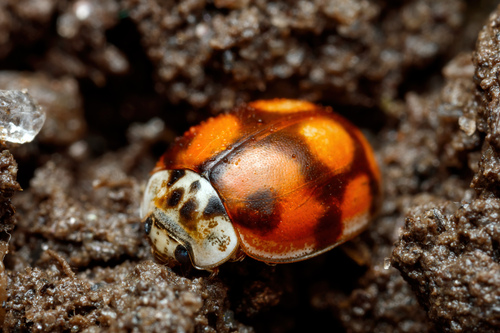
10-spot Ladybird
Adalia decempunctata
A master of disguise and a champion of the garden, the 10-spot Ladybird is one of the most variable and helpful beetles you can find. Watch as this tiny predator patrols your trees, keeping aphid populations in check with remarkable efficiency.
Quick Identification
Size
3.5 to 5 mm (0.14 to 0.20 inches)
Colors
Highly polymorphic; usually orange or red with 10 black spots, but can be black with red markings or brownish; typically features pale, orange-brown legs.
Key Features
- Highly variable spotting patterns, usually totaling 10
- Pale, orange-brown legs (unlike many other species)
- Small, rounded body shape
- Cream-colored pronotum with variable black marks often forming a 'U' or 'M' shape
When You’ll See Them
Geographic range
Where Does the 10-spot Ladybird Live?
This resilient little beetle is native to the Palearctic region, spanning across almost the entirety of Europe and extending into North Africa and temperate Asia. It is a common sight from the British Isles across to Central Asia, thriving in varied climates ranging from the Mediterranean to the southern reaches of Scandinavia. While primarily a resident of these traditional ranges, its adaptable nature allows it to maintain stable populations in almost any area with healthy deciduous foliage and a steady supply of aphids.
Basemap © OpenStreetMap contributors
Behavior
The 10-spot Ladybird is a tireless predator of aphids, spending its days patrolling the leaves of deciduous trees and shrubs. Unlike some of its more famous relatives, it is a specialist of the canopy, though it frequently descends to garden level during the height of summer. It is highly active during the day, using its sensitive antennae to detect the chemical signals released by distressed plants or the sweet 'honeydew' excreted by its prey.
These beetles are solitary hunters but may congregate in large numbers during the late autumn as they seek out hibernating spots. They often tuck themselves into bark crevices, ivy, or the corners of garden sheds to survive the winter. While they are harmless to humans, they can emit a pungent yellow fluid (reflex bleeding) from their leg joints if they feel threatened, which acts as a chemical deterrent to birds and other predators.
EverydayEarth exclusive
Camera Tips
Capturing the 10-spot Ladybird on camera requires a macro-capable setup, as these beetles are only a few millimeters long. Since they are canopy specialists, focus your camera on the underside of leaves or the terminal buds of deciduous trees like Oak, Lime, or Sycamore. Placing your camera at eye level near garden shrubs or fruit trees is your best bet for spotting them as they forage for aphids.
Lighting is crucial for these small, often shiny insects. To avoid the 'hot spot' reflection from their elytra (wing cases), try to position your camera in bright but indirect light. If your AI camera allows for triggered video, set it to the highest sensitivity. Because they are most active during the warmest parts of the day, ensure your lens is clean and free of morning dew, which can obscure the fine details of their variable markings.
To attract them into your camera's field of view, you don't need traditional bait. Instead, 'lure' them by planting aphid-friendly flowers like Calendula or Yarrow nearby, or by leaving a small patch of nettles. Ladybirds are also attracted to sources of moisture during dry spells, so a shallow dish with pebbles and a little water nearby might encourage them to stop for a drink and a photo-op.
Frequently Asked Questions
Record 10-spot Ladybird at your habitat
Connect a camera to start building your own species record — AI identifies every visitor automatically.