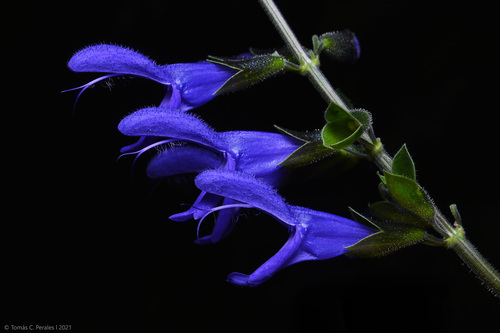
Anise-scented sage
Salvia guaranitica
Featuring breathtaking cobalt-blue spikes and a sweet licorice aroma, Anise-scented sage is the crown jewel of the pollinator garden. This South American native is a magnet for hummingbirds and a favorite for backyard photographers seeking a splash of high-contrast color.
Quick Identification
Size
1.2–1.5 meters (4–5 feet) tall; 0.6–0.9 meters (2–3 feet) wide
Colors
Intense cobalt blue tubular flowers with dark purple to black calyxes and emerald green foliage
Key Features
- Deep cobalt blue tubular flowers
- Ovate, wrinkled dark green leaves
- Strong anise or licorice scent when foliage is crushed
- Distinctive dark purple or black calyxes
- Tall, square-stemmed upright growth habit
When You’ll See Them
Geographic range
Where Does the Anise-scented sage Live?
Anise-scented sage is native to the diverse ecosystems of South America, specifically the regions spanning Brazil, Paraguay, Uruguay, and Northern Argentina. Because of its stunning visual appeal and benefit to pollinators, it has been widely introduced and cultivated across North America, Europe, and Asia. In some temperate regions with mild winters, such as parts of New Zealand and Chile, the plant has successfully naturalized, thriving in climates that mimic the humid warmth of its original home.
Basemap © OpenStreetMap contributors
Behavior
Anise-scented sage is a vigorous, herbaceous perennial known for its dramatic vertical presence and its role as a premier nectar source. In the garden, it functions as a social hub for wildlife; it typically begins its growth spurt in late spring, reaching its full height by mid-summer when it produces elongated flower spikes. These flowers are uniquely evolved for pollination by long-tongued visitors, particularly hummingbirds, who can easily access the deep nectar tubes.
The plant is resilient and fast-growing, spreading through underground tubers and rhizomes to form dense clumps. While it is a peaceful garden resident, it is highly competitive for sunlight and space, often becoming the focal point of a flower bed. Its most famous characteristic—the scent—is a chemical defense mechanism; when the leaves are brushed or bruised by passing animals or humans, they release a potent anise-like aroma that deters many mammalian herbivores like deer.
EverydayEarth exclusive
Camera Tips
To capture the best footage of Anise-scented sage and its many visitors, position your camera approximately 3 to 4 feet away from the most active flower spikes. Since this plant is a primary magnet for hummingbirds, set your camera at 'eye level' with the blossoms—roughly 3 to 5 feet off the ground—using a garden stake or a specialized plant mount. A side-profile angle is best for capturing the dramatic moment a hummingbird hovers and extends its tongue into the tubular flowers.
Because hummingbirds and sphinx moths move with incredible speed, use a camera with a high frame rate (60fps or higher) and a very fast trigger speed to avoid 'ghosting' images. If your AI camera has a specific 'Bird' detection mode, ensure it is calibrated for small, fast-moving targets. If the PIR sensor is struggling to trigger on such small animals, consider using a time-lapse setting that captures an image every 5 seconds during the peak morning hours when nectar production is at its highest.
Lighting is critical for showcasing the plant's unique 'Black and Blue' aesthetic. Position the camera so the sun is behind you, illuminating the flowers directly. This prevents the deep blue petals from looking black in the shadows. In late summer, keep the area around the base of the plant clear of tall grass so the camera's view of the lower spikes remains unobstructed. If you are using a trail camera with infrared capabilities, note that the true beauty of this species is found in its daytime color, so prioritize settings that maximize high-definition color capture during daylight hours.
Frequently Asked Questions
Record Anise-scented sage at your habitat
Connect a camera to start building your own species record — AI identifies every visitor automatically.