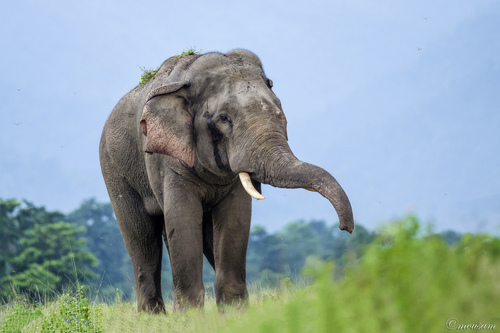
Asian Elephant
Elephas maximus
The gentle giant of the Eastern forests, the Asian Elephant is a master of intelligence and social complexity. Discover how these majestic pachyderms navigate their shrinking world and how you can observe them responsibly.
Quick Identification
Size
Height: 2.4–3m (8–10 ft); Weight: 2,700kg (6,000 lbs) for females to over 4,000kg (8,800 lbs) for males
Colors
Grey skin with pinkish-white depigmentation spots on the trunk, ears, and neck; black hair tufts on tail
Key Features
- Single finger-like process at the tip of the trunk
- Smaller, rounded ears that fold laterally
- Arched or level back
- Twin-domed forehead with an indent in the middle
When You’ll See Them
Geographic range
Where Does the Asian Elephant Live?
Native to the sprawling landscapes of South and Southeast Asia, the Asian Elephant's territory spans 13 countries from the foothills of the Himalayas to the tropical islands of Indonesia. India holds the largest remaining population, followed by significant clusters in Sri Lanka, Thailand, and Myanmar. While their ancestral range once extended into West Asia and across China, they are now restricted to fragmented pockets of forest and protected national parks across the tropical belt.
Basemap © OpenStreetMap contributors
Behavior
Asian elephants are highly social and intelligent creatures, traditionally living in matriarchal family groups led by the oldest female. They spend up to 18 hours a day foraging and moving through their home ranges, displaying deep emotional intelligence through complex vocalizations, touch, and even signs of grief. Bulls typically become more solitary as they age but may form loose "bachelor" groups during certain times of the year.
As their natural habitats shrink, these elephants frequently interact with human settlements. They are known for their remarkable problem-solving skills, sometimes learning to disable electric fences with non-conductive wood or timing their raids on crops to avoid human detection. In many cultures, they are revered as spiritual symbols, yet the "human-elephant conflict" remains a significant challenge for conservationists today.
EverydayEarth exclusive
Camera Tips
Capturing an Asian elephant on a trail camera requires heavy-duty planning and specialized equipment. These animals are incredibly curious and powerful; if they smell a foreign object in their environment, they may investigate it with their trunks, which often leads to the camera being ripped off the tree, bitten, or crushed. Always use a high-quality steel security box (bear box) and lag-bolt it directly into a very large, sturdy hardwood tree at a height of about 7 to 8 feet, angled slightly downward. This height keeps the camera mostly out of the "easy reach" zone of younger elephants while capturing the full body of adults.
Placement is the most critical factor for success. Focus on established "elephant corridors" or well-worn paths leading to water holes and natural salt licks. Elephants are creatures of habit and will use the same trails for generations. Because they are active both day and night, ensure your camera has a fast trigger speed (0.3 seconds or less) and a high-quality "No-Glow" infrared flash. Standard infrared flashes produce a faint red glow that elephants can often see, which may trigger their curiosity or cause them to avoid the area.
In agricultural fringe areas, placing cameras near "hotspots" like fruiting jackfruit or mango trees can yield spectacular results, but be mindful of human activity. Avoid using strong-smelling lures or food baits as this almost always triggers destructive curiosity. Instead, rely on natural funnels in the landscape like narrow valley passes or river crossings. Because of the high humidity in their tropical habitats, use lithium batteries and high-endurance SD cards to prevent equipment failure between checks.
Frequently Asked Questions
Record Asian Elephant at your habitat
Connect a camera to start building your own species record — AI identifies every visitor automatically.