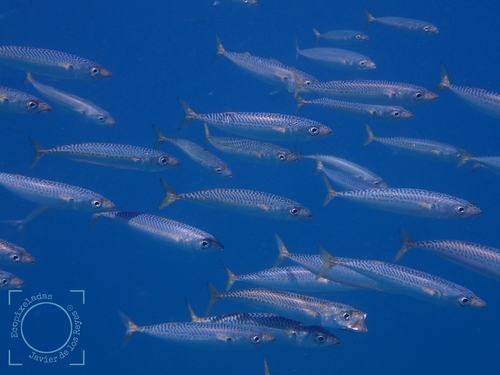
Atlantic Chub Mackerel
Scomber colias
Often called the 'Tinker Mackerel,' this shimmering speedster of the Atlantic is famous for its intricate zig-zag patterns and lightning-fast schooling maneuvers. Whether you're watching from a coastal pier or deploying an underwater camera, their arrival signals the vibrant pulse of the ocean's summer season.
Quick Identification
Size
Typically 20–30 cm (8–12 inches) in length, reaching a maximum of 50 cm (20 inches). They generally weigh between 0.5 to 1.1 kg (1.1–2.4 lbs).
Colors
Metallic green-blue upper body with dark, zig-zagging wavy bars; silvery-white belly often featuring faint grey spots or dusky blotches in adults.
Key Features
- Dark, wavy 'tiger stripes' across the back
- Large eyes with a prominent transparent adipose eyelid
- Two widely separated dorsal fins
- Silvery belly with subtle dusky spotting
When You’ll See Them
Geographic range
Where Does the Atlantic Chub Mackerel Live?
Native to the temperate and subtropical waters of the Atlantic Ocean, the Atlantic Chub Mackerel spans a massive geographic range from the coast of Nova Scotia down to Argentina in the west, and from the Bay of Biscay to South Africa in the east. They are particularly prolific throughout the Mediterranean and Black Seas, where they support significant local fisheries. While they are a wide-ranging oceanic species, they are frequently seen in coastal environments during seasonal migrations as they follow warm water currents northward.
Basemap © OpenStreetMap contributors
Behavior
The Atlantic Chub Mackerel is a highly social and energetic pelagic species, known for forming massive, fast-moving schools that can include thousands of individuals. These schools are often segregated by size to maintain hydrodynamic efficiency, as they are constant swimmers that rely on ram ventilation to breathe. They are remarkably fast predators, darting through the upper water column with incredible agility to snatch prey.
Daily life for a mackerel revolves around vertical migration; they typically stay in deeper waters during the day to avoid predators like tuna and sharks, then move toward the surface at night to feed. While they are primarily offshore fish, they are known to enter coastal bays and harbors in pursuit of baitfish, often bringing them into close proximity with human structures like piers and docks. They do not have a strong fear of humans but are easily spooked by sudden shadows or vibrations in the water.
EverydayEarth exclusive
Camera Tips
Capturing the Atlantic Chub Mackerel requires an underwater setup, ideally positioned near a structure like a private dock, pier, or a tethered buoy. Use a waterproof action camera or a specialized underwater trail camera mounted 1 to 3 meters below the surface. Point the lens slightly upward toward the surface light to capture the iridescent 'tiger stripes' on their backs, which pop beautifully against the sunlight filtering through the water.
To draw a school into your camera's field of view, use a perforated 'chum bag' filled with oily fish scraps or frozen shrimp tied just out of shot but within the current's path. The scent trail will lure them in, and their natural curiosity will often keep them circling the area. If you are in a high-clarity area, adding a shiny, silver spinning lure (with hooks removed) near the camera can mimic the flash of baitfish and trigger their predatory instincts, causing them to strike or investigate the lens.
Because mackerel are incredibly fast swimmers, set your camera to the highest possible frame rate (at least 60fps) to avoid motion blur. If your camera has a 'burst mode' for stills, use it to catch the split-second turns they make. In coastal 'backyards' with murky water, timing is everything—try to record during a high tide when cleaner ocean water is pushed closer to shore, providing the visibility needed for clear identification.
Similar Species
Species that look similar or are commonly confused with Atlantic Chub Mackerel.
Frequently Asked Questions
Record Atlantic Chub Mackerel at your habitat
Connect a camera to start building your own species record — AI identifies every visitor automatically.