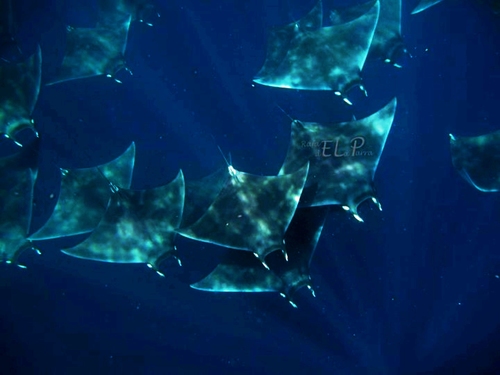
Atlantic Pygmy Devil Ray
Mobula hypostoma
The Atlantic Pygmy Devil Ray is a miniature marvel of the western Atlantic, known for its incredible acrobatic leaps and graceful underwater flight. Though smaller than its giant manta relatives, its social nature and stunning aerial displays make it a crown jewel of coastal wildlife.
Quick Identification
Size
Disc width typically ranges from 1 to 1.2 meters (3.3 to 4 feet); weight is generally between 10 and 25 kg (22 to 55 lbs).
Colors
Dark grey to bluish-black on the dorsal (upper) side; creamy white on the ventral (under) side with occasional dark spotting near the fin edges.
Key Features
- Distinctive 'horns' (cephalic fins) flanking the mouth
- Subterminal mouth located on the underside of the head
- Long, whip-like tail without a stinging spine
- Small, compact body compared to larger manta rays
When You’ll See Them
Geographic range
Where Does the Atlantic Pygmy Devil Ray Live?
The Atlantic Pygmy Devil Ray is native to the western Atlantic Ocean, thriving in the warm waters along the Americas. Its range extends from the North Carolina coast in the United States, through the Gulf of Mexico and Caribbean Sea, down to the southern shores of Brazil. These rays are rarely found in the open ocean, preferring the nutrient-rich waters of the continental shelf.
Basemap © OpenStreetMap contributors
Behavior
The Atlantic Pygmy Devil Ray is a highly energetic and social species often found traveling in small groups or large schools. They are famous for their acrobatic breaching behavior, where they propel themselves out of the water and perform spectacular flips or belly-flops before splashing back down. While the exact reason for this behavior is debated—ranging from communication to parasite removal—it makes them a favorite for coastal observers.
These rays are generally shy and avoid direct contact with humans, though they may be drawn to areas with high concentrations of plankton. Unlike their larger manta cousins, they spend a significant amount of time in shallow coastal waters. They are filter feeders, swimming with their cephalic fins unfurled to funnel water and food into their mouths as they glide gracefully through the water column.
EverydayEarth exclusive
Camera Tips
Capturing the Atlantic Pygmy Devil Ray on camera requires a specialized approach since they are primarily underwater. If you live on a coastal property or have a private dock, an underwater action camera (like a GoPro with a Wi-Fi extension) mounted to a piling or weighted on a shallow sandy bottom is the most effective setup. Position the camera between 1 and 3 meters deep, facing toward the open water or parallel to the shoreline to catch them as they cruise along the coast.
Because these rays are drawn to plankton-rich waters, areas with coastal lights or docks that attract small fish at night can be hotspots, though the rays themselves are most active during the day. Use a wide-angle lens to capture their full wingspan, and ensure your camera is set to a high frame rate (60fps or higher) to catch their swift, flapping movements and occasional breaches.
If you are trying to capture their famous 'jumping' behavior from above the water, use a motion-activated trail camera mounted on a pier or balcony overlooking the sea. Set the trigger interval to the shortest possible time and use a polarized filter on the lens to cut through the water's surface glare. This increases the chances of seeing the dark silhouette of the ray just before it breaks the surface.
Similar Species
Species that look similar or are commonly confused with Atlantic Pygmy Devil Ray.
Frequently Asked Questions
Record Atlantic Pygmy Devil Ray at your habitat
Connect a camera to start building your own species record — AI identifies every visitor automatically.