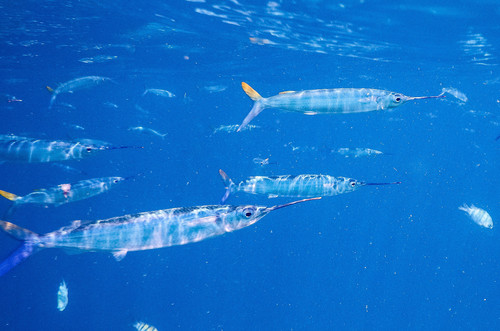
Ballyhoo
Hemiramphus brasiliensis
A flash of silver and a splash of red, the Ballyhoo is the undisputed acrobat of the Atlantic shallows. Watch them skip across the waves and navigate the sun-drenched seagrass beds in shimmering schools.
Quick Identification
Size
25–35 cm (10–14 in) in length; weighs up to 0.5 kg (1.1 lbs)
Colors
Iridescent silver sides with a dark bluish-green back; the lower jaw is famously tipped with bright orange or red
Key Features
- Elongated lower jaw significantly longer than the upper jaw
- Deeply forked tail with a longer lower lobe
- Slender, streamlined silver body
- Bright orange or red fleshy tip on the beak
When You’ll See Them
Geographic range
Where Does the Ballyhoo Live?
The Ballyhoo is a vibrant inhabitant of the Atlantic Ocean, favoring the warm, sun-drenched coastal waters of the Western Atlantic. Its native range is expansive, stretching from the temperate shores of the northeastern United States and Bermuda down through the Gulf of Mexico and the entire Caribbean basin. This species is a staple of tropical reef systems and can be found as far south as the coast of Brazil, making it one of the most widely distributed halfbeaks in the Americas.
Basemap © OpenStreetMap contributors
Behavior
In a backyard or dockside setting, you will observe them hovering just inches below the surface, facing into the current to catch drifting organic matter. They are relatively docile but extremely skittish; a sudden shadow or splash will send the entire school darting away in a synchronized flash of silver. While they are a favorite for saltwater anglers to use as bait, they are also important ecological indicators of reef health and seagrass productivity.
EverydayEarth exclusive
Camera Tips
Attracting a school to your camera's field of view is best achieved using a chum bag. A mesh bag filled with oily fish scraps or even soaked breadcrumbs suspended about three feet from the lens will create a focal point for the school. Ballyhoo are fast movers, so set your camera to a high frame rate—at least 60 frames per second—to avoid motion blur when they dart in to feed. If the water is murky, try to film during high tide when clearer ocean water is pushed toward the shore.
Lighting is your biggest challenge and your best tool. Mid-morning is the ideal time to film, as the sun is high enough to penetrate the water but not so vertical that it creates a harsh glare on the surface. If you are using a trail camera in a waterproof housing, ensure it is secured tightly to a piling or weighted on the seafloor with a buoyant tether so it doesn't drift. Check the lens daily, as salt spray and algae can quickly obscure the glass in the warm coastal environments where Ballyhoo thrive.
Similar Species
Species that look similar or are commonly confused with Ballyhoo.
Frequently Asked Questions
Record Ballyhoo at your habitat
Connect a camera to start building your own species record — AI identifies every visitor automatically.