balmain bug
Ibacus peronii
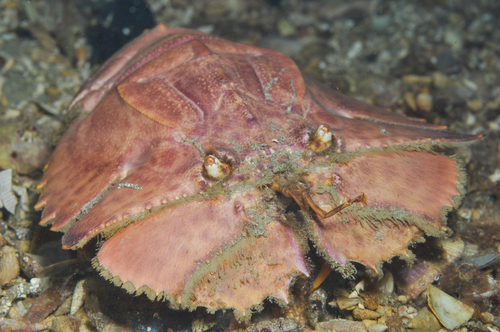
Hidden beneath the Australian sands, the Balmain bug is a marvel of marine evolution. With its butterfly-like shape and expert camouflage, this 'slipper lobster' is a nocturnal icon of the southern shelf.
Quick Identification
Size
Grows up to 23 cm (9 in) in length and 14 cm (6 in) in width; typically weighs between 200g and 400g.
Colors
Broadly reddish-brown or orange-brown with a mottled, sandy pattern for camouflage; underside is typically paler cream or white.
Key Features
- Extremely flattened, shovel-like body
- Wide, leaf-shaped antennae without long whip-like filaments
- Complete lack of pincers or claws
- Large tail fan used for rapid backward swimming
When You’ll See Them
Geographic range
Where Does the balmain bug Live?
The Balmain bug is native to the coastal waters of the Australian continent, primarily occupying the temperate and subtropical shelf zones. Its range is concentrated along the southern half of the country, stretching from central New South Wales, around the Victorian and Tasmanian coasts, and westward to the central coast of Western Australia. It is a resident species within these shelf environments, rarely venturing into very shallow intertidal zones or deep abyssal waters.
Basemap © OpenStreetMap contributors
Behavior
The Balmain bug is a master of seafloor camouflage, spending its daylight hours almost entirely submerged in soft sediment. By using its specialized, shovel-like antennae, it can quickly excavate a shallow burrow in the sand or mud, leaving only its eyes exposed to watch for predators or passing prey. This sedentary daytime strategy is essential for avoiding larger fish and octopuses that patrol the Australian shelf.
Under the cover of darkness, these slipper lobsters become active foragers. They emerge from the sand to crawl along the substrate in search of food. While they appear slow and deliberate, they possess an impressive 'escape response'—a rapid contraction of the powerful abdomen that propels them backward through the water to evade danger. Unlike their aggressive cousins, the spiny lobsters, Balmain bugs are non-aggressive and rely entirely on armor and stealth for survival.
EverydayEarth exclusive
Camera Tips
To capture high-quality footage of a Balmain bug, you will need a specialized underwater setup, such as a weighted drop-camera or a submersible bait station. Since these animals inhabit the seafloor, place your camera directly on the substrate in sandy areas near rocky reef edges. Angle the lens slightly upward or use a low-profile mount to capture their unique flattened silhouette as they emerge from the sand.
Illumination is critical for these nocturnal crustaceans. Use infrared (IR) underwater lights rather than bright white LEDs; white light can cause the bugs to remain buried or attract 'trash fish' like small scads and yellowtail that will swarm the lens and obscure your subject. IR lighting allows you to observe their natural foraging behavior without disturbing their light-sensitive eyes.
Bait is the most effective way to draw a Balmain bug into your camera's field of view. Use a mesh bait bag filled with oily fish like sardines or crushed mullet frames, and secure it roughly 30-50 cm in front of the lens. The scent trail will encourage buried bugs to excavate themselves and approach the camera. Ensure your housing is properly weighted, as the coastal currents where these lobsters live can easily shift lighter equipment.
Frequently Asked Questions
Record balmain bug at your habitat
Connect a camera to start building your own species record — AI identifies every visitor automatically.