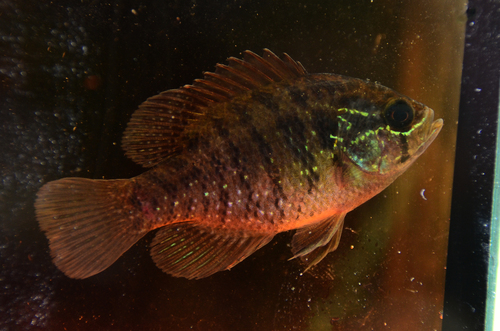
Banded Sunfish
Enneacanthus obesus
A hidden gem of the Eastern swamplands, the Banded Sunfish is an iridescent beauty that thrives in the quiet, tea-colored waters of the coastal plain.
Quick Identification
Size
2 to 3.75 inches (5 to 9.5 cm) in length; typically weighs less than 1 ounce (28g)
Colors
Olive, brown, or tan body with 5-8 dark vertical bands. Covered in iridescent blue, purple, or emerald green spots. Fins are often dusky with similar spotting.
Key Features
- Deep, compressed oval body shape
- 5-8 prominent dark vertical bands along the flanks
- Rounded tail fin (caudal fin)
- Dark 'ear' spot on the operculum with a pale margin
- Small, upturned mouth
When You’ll See Them
Geographic range
Where Does the Banded Sunfish Live?
Native to the Atlantic and Gulf Coastal Plains of North America, the Banded Sunfish occupies a narrow but long ribbon of territory. Its range extends from the coastal drainage basins of southern New Hampshire and Massachusetts down through the lowlands of the Carolinas and Georgia, reaching into central Florida and as far west as the Perdido River drainage in Alabama. It is a specialist of the 'tea-colored' acidic waters found in the eastern United States, often thriving in habitats that are too acidic for other fish species.
Basemap © OpenStreetMap contributors
Behavior
The Banded Sunfish is a shy, reclusive member of the sunfish family that behaves quite differently from its larger, more aggressive relatives. It is a 'sit-and-wait' micro-predator, often found hovering perfectly still among the stems of aquatic plants or under the shade of lily pads. This species is highly adapted to the 'blackwater' environments of the coastal plain, where the water is stained dark by tannins and is naturally acidic.
Unlike many other centrarchids, Banded Sunfish are not particularly social and do not form large schools. They are most active during the day, navigating through dense underwater 'forests' of vegetation. They are relatively sedentary, rarely traveling far from their preferred patch of weeds. During the spring spawning season, males become more territorial and build small, inconspicuous nests in the sand or among root masses, though they remain far less vocal or aggressive than larger sunfish.
EverydayEarth exclusive
Camera Tips
Capturing the Banded Sunfish on an underwater AI camera requires focusing on 'micro-habitats' within your pond or stream. Because these fish are small and avoid open water, place your camera housing directly inside dense stands of aquatic vegetation like bladderwort, water milfoil, or near the submerged stems of water lilies. Aim the lens toward a small natural clearing within the weeds where the sunfish are likely to hover and hunt. Using a camera with a short focal distance or macro capability is ideal for these 3-inch subjects.
Lighting is your biggest challenge in their preferred 'blackwater' habitats. The high tannin content in the water makes it look like tea, which absorbs light quickly. Position your camera to take advantage of mid-morning or mid-afternoon sun when rays can penetrate the canopy and illuminate the fish’s iridescent spots. If your camera setup allows for an external light source, a low-intensity fill light can help reveal the brilliant blues and greens that the camera might otherwise miss in the dark, acidic water.
Since Banded Sunfish are insectivores, you can attract them to your lens by gently disturbing the sediment near the camera site to release larvae, or by placing a small mesh feeder bag filled with frozen bloodworms or brine shrimp just out of the frame. Ensure the camera is mounted securely to a weighted base or a submerged stake, as even minor currents or turtle activity can shift the framing. The best time to record is during the spring spawning season when the males are at their most colorful and are more likely to stay in one spot to defend their nest.
Frequently Asked Questions
Record Banded Sunfish at your habitat
Connect a camera to start building your own species record — AI identifies every visitor automatically.