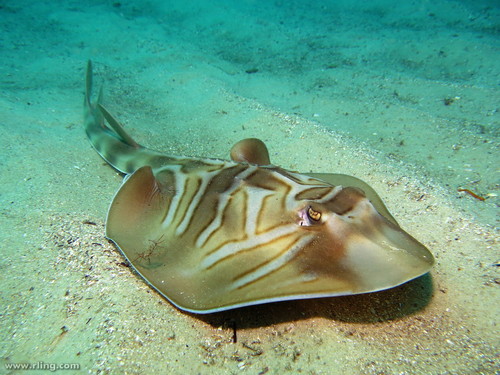
Banjo Ray
Trygonorrhina fasciata
The Banjo Ray is a master of underwater camouflage, adorned with intricate, violin-like patterns that help it disappear into the Australian seafloor. Harmless and hardy, this unique 'banjo-shaped' fish is a favorite for backyard marine observers and coastal explorers.
Quick Identification
Size
Typically 1 to 1.2 metres (3.3 to 3.9 feet) in length; weighs up to 7 kg (15.4 lbs).
Colors
Sandy brown to greyish-yellow with a complex pattern of dark-edged white or pale grey lines forming triangular shapes behind the eyes.
Key Features
- Distinctive banjo or fiddle-shaped body
- Intricate white-edged triangular pattern behind the eyes
- Two large, upright dorsal fins on the tail
- Lacks a venomous tail spine unlike many other rays
When You’ll See Them
Geographic range
Where Does the Banjo Ray Live?
Native to the coastal waters of Oceania, the Banjo Ray is an endemic species found exclusively along the eastern coast of Australia. Its range extends from the warm subtropical waters of southern Queensland down through the temperate shores of New South Wales and into eastern Victoria. It is a permanent resident of these shelf waters, rarely venturing into the deep open ocean.
Basemap © OpenStreetMap contributors
Behavior
The Banjo Ray, often called the Eastern Fiddler Ray, is a docile and slow-moving bottom-dweller. It spends much of its day partially buried in the sediment or resting motionless on the seafloor, relying on its incredible camouflage to remain undetected by predators like sharks. Unlike many of its relatives, it is remarkably approachable and does not possess a stinging barb, making it a common sight for snorkelers in shallow bays.
While they may appear sluggish, they are efficient hunters that use their powerful pectoral fins to 'walk' or glide along the sand. They are primarily solitary but are frequently seen in small groups when feeding in nutrient-rich estuaries or during mating seasons. When threatened, they rely on a quick burst of speed to disappear into deeper water or thicker seagrass beds.
EverydayEarth exclusive
Camera Tips
Capturing a Banjo Ray on camera requires a waterproof setup, ideally an action camera or a specialized marine trail camera with a weighted base to prevent it from drifting in the current. Position your camera at a low angle, roughly 10–20 centimeters above the seabed, aimed at a sandy clearing adjacent to a rocky reef or pier pylon. These 'interstitial' zones are high-traffic corridors for rays moving between shelter and feeding grounds.
Because Banjo Rays are highly active after dark, ensure your camera has a strong infrared (IR) flash or low-light sensor. Avoid using bright white LED lights if possible, as the reflective white patterns on their skin can 'blow out' the image, making identification difficult. Setting the camera to take short 15-second video clips is often better than photos, as it captures the unique 'shovelnose' gliding motion that distinguishes them from other flatfish.
To attract a Banjo Ray to your camera's field of view, use a 'burley' scent lure. A perforated PVC pipe filled with crushed crab shells or oily fish trimmings staked into the sand will draw them in. They will often spend several minutes 'vacuuming' the sand around the lure, providing excellent footage. Always check local regulations regarding baiting in marine parks before setting your equipment.
Frequently Asked Questions
Record Banjo Ray at your habitat
Connect a camera to start building your own species record — AI identifies every visitor automatically.