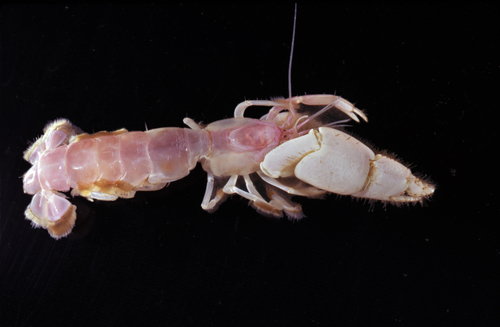
Bay Ghost Shrimp
Neotrypaea californiensis
The pale, hardworking architect of the Pacific mudflats, the Bay Ghost Shrimp spends its life engineering a hidden world beneath the sand.
Quick Identification
Size
Grows to a length of 11.5 cm (4.5 inches); weight is typically 10-20 grams
Colors
Creamy white to pale pink or ghostly orange; body is often translucent; males have a noticeably brighter or more opaque large claw
Key Features
- One significantly oversized claw in males used for mating displays
- Pale, translucent exoskeleton that reveals internal organs
- Elongated, soft abdomen and four pairs of delicate walking legs
When You’ll See Them
Geographic range
Where Does the Bay Ghost Shrimp Live?
The Bay Ghost Shrimp is a staple of the Pacific coast of North America. Its native range stretches from the cold, nutrient-rich waters of southeastern Alaska down through the temperate shores of British Columbia, Washington, Oregon, and California, terminating in the subtropical gulfs of Baja California, Mexico. They are most commonly found in the stable, muddy substrates of protected estuaries where wave action is minimal.
Basemap © OpenStreetMap contributors
Behavior
The Bay Ghost Shrimp is a master of subterranean engineering. These crustaceans spend nearly their entire lives within elaborate, multi-branched burrow systems that can extend over 30 inches deep into the intertidal mud. They are known as "bioturbators" because their constant digging and ventilating of these tunnels completely reshapes the sediment. This process aerates the soil and recycles nutrients, making them vital to the health of the coastal ecosystem, even though their activity can sometimes destabilize the ground for oyster beds.
Socially, Bay Ghost Shrimp are somewhat solitary within their tunnels, though their burrows often exist in dense colonies. Males are territorial and will use their oversized master claws to block intruders or engage in ritualized wrestling during the mating season. They are rarely seen on the surface; their presence is usually only signaled by the small, volcano-like mounds of sand and discarded sediment they push out of their burrow entrances during low tide.
EverydayEarth exclusive
Camera Tips
Capturing the Bay Ghost Shrimp on a backyard or trail camera requires a specialized aquatic or intertidal setup. Since these animals rarely leave their burrows, your best bet is to use a waterproof action camera, like a GoPro, mounted on a low-profile weighted base. Look for areas at low tide with high concentrations of small sand mounds (their "chimneys"). Position the camera to face a burrow entrance horizontally, ideally as the tide begins to return. The shrimp are most active in clearing their tunnels once the water begins to flow back in, providing the best opportunity to see them emerge partially from the hole.
For those with property bordering an estuary, setting up a "burrow cam" can be fascinating. You can simulate their natural environment in a narrow glass observation tank—often called a "formicarium" style setup—where the shrimp is encouraged to dig against the glass. Use a camera with macro capabilities or a high-quality trail camera with a close-focus lens. Infrared (IR) settings are excellent here, as ghost shrimp are not deterred by IR light and will continue their frantic digging and cleaning behaviors throughout the night.
When filming in the wild, stability is vital. The shifting sands and moving tides can easily tip a light camera. Use a sand anchor or a heavy diving weight to keep your gear in place. Avoid using bright white lights at night, which can attract predatory fish or crabs that might harass the shrimp or obscure your view. Instead, rely on natural light during the day in shallow water, and ensure your camera is set to a high frame rate to capture the rapid, rhythmic pulsing of their swimmerets (pleopods) as they pump water through their tunnels.
Similar Species
Species that look similar or are commonly confused with Bay Ghost Shrimp.
Frequently Asked Questions
Record Bay Ghost Shrimp at your habitat
Connect a camera to start building your own species record — AI identifies every visitor automatically.