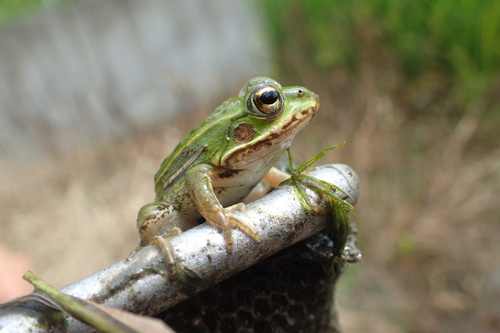
Black-spotted Frog
Pelophylax nigromaculatus
A vibrant icon of East Asian wetlands, the Black-spotted Frog is famous for its striking green color and incredible leaping ability. This adaptable amphibian is a frequent visitor to backyard ponds and garden water features.
Quick Identification
Size
6-9 cm (2.4-3.5 inches) in length; weight typically 20-50 grams
Colors
Bright green to olive or brown base with large, irregular black spots. Usually features a distinct light green or cream-colored stripe running down the spine.
Key Features
- Distinctive pale stripe along the center of the back
- Prominent skin ridges (dorsolateral folds) running along each side
- Large dark spots across the back and limbs
- Pointed snout and large, visible eardrums
When You’ll See Them
Geographic range
Where Does the Black-spotted Frog Live?
Native to the temperate and subtropical regions of East Asia, the Black-spotted Frog is a ubiquitous sight throughout mainland China, the Korean Peninsula, and Japan. It is also found in the southern reaches of the Russian Far East and parts of Vietnam. This species is remarkably successful in agricultural landscapes, particularly in areas where traditional rice cultivation provides an abundance of seasonal wetland habitat.
Basemap © OpenStreetMap contributors
Behavior
The Black-spotted Frog is an active and highly visible species that spends much of its time at the water's edge. They are classic 'sit-and-wait' predators, remaining perfectly still for long periods until an insect wanders within range, at which point they strike with lightning speed using their sticky tongues. They are incredibly powerful jumpers, often using their strong hind legs to leap several feet into the safety of the water when they feel threatened.
During the spring and early summer breeding seasons, these frogs become quite vocal. Males develop vocal sacs that allow them to produce a loud, rhythmic croaking sound to attract females. While they are mostly solitary throughout the year, they gather in large numbers in shallow wetlands during this time. They are relatively comfortable around human habitation, provided there is a clean water source and plenty of vegetation for cover.
EverydayEarth exclusive
Camera Tips
To capture the best footage of a Black-spotted Frog, you need to think low. Position your AI-powered camera just a few inches off the ground, ideally on a small tripod or weighted mount. The best placement is at the edge of a pond or a slow-moving ditch, pointing the lens toward a flat rock or a muddy bank where frogs like to haul out and bask in the sun. An angle that is slightly side-on will help the AI identify the distinctive dorsal stripe and spots more accurately.
Since these frogs are primarily active during the day, high-shutter-speed settings are beneficial to catch them in mid-leap. If your camera has a 'near-focus' or macro mode, enable it, as these subjects are often small and close to the lens. For evening activity, avoid using a harsh white flash which can cause 'eye-shine' and wash out the green colors; instead, rely on high-sensitivity sensors or subtle infrared illumination if your camera supports it.
While you shouldn't feed wildlife directly, you can 'bait' the area by attracting their natural prey. A small, solar-powered garden light placed near the camera's field of view will attract insects at night, which will in turn draw the frogs to your 'studio' area. During the spring, focus your camera on shallow water areas with emerging vegetation, as this is where you'll capture the most interesting social behaviors and calling displays.
Similar Species
Species that look similar or are commonly confused with Black-spotted Frog.
Frequently Asked Questions
Record Black-spotted Frog at your habitat
Connect a camera to start building your own species record — AI identifies every visitor automatically.