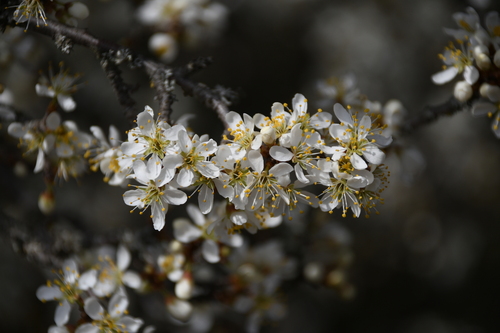
Blackthorn
Prunus spinosa
The Blackthorn is the guardian of the hedgerow, offering a snowy explosion of spring blossoms and a fortress of thorns for nesting birds. Its bitter autumn fruit provides a vital winter feast, making it a centerpiece for backyard biodiversity.
Quick Identification
Size
Height: 3-5 meters (10-16 feet); Spread: 3-4 meters (10-13 feet)
Colors
Dark, almost black bark; snow-white blossoms; oval green leaves; deep purple-black fruit with a dusty blue waxy coating
Key Features
- Dense, zig-zagging branches tipped with sharp thorns
- Five-petaled white flowers that appear on bare wood before leaves emerge
- Small, bitter, plum-like fruit (sloes) measuring about 1cm (0.4 inches)
When You’ll See Them
Loading activity data...
Behavior
Blackthorn is a rugged, deciduous large shrub or small tree that plays a vital role in the ecosystem as a 'pioneer' species. It is famous for being one of the first plants to bloom in the spring, often creating a striking white 'snow' effect across hedgerows as early as March. Because its thorns are so dense and sharp, it provides an impenetrable sanctuary for nesting birds like the Long-tailed Tit and various finches, protecting them from larger predators.
As the season progresses, the Blackthorn transforms from a floral display into a fruit-bearing powerhouse. In the autumn, it produces 'sloes,' which are technically small, bitter plums. While too tart for most humans to eat raw, they are a critical late-season food source for thrushes and waxwings. For humans, the shrub has a long history of folklore and utility, traditionally used for livestock fencing and as the primary ingredient for sloe gin.
EverydayEarth exclusive
Camera Tips
To capture the true beauty of Blackthorn with your AI-powered camera, placement is everything. During the early spring bloom, position your camera on a tripod or stake roughly 3 to 4 feet off the ground, angled slightly upward toward a cluster of buds. Because Blackthorn flowers before its leaves, the white blossoms pop beautifully against the dark, moody bark. Set your camera to a higher sensitivity to capture the rapid movement of early-season pollinators like queen bumblebees and hoverflies that frequent the nectar-rich flowers on sunny mornings.
If you are looking to capture wildlife interactions, aim your camera at a 'gap' or a flatter section of the hedge. Birds often use the outer thorns as a staging post before diving into the safety of the interior. Using a camera with a fast trigger speed is essential here, as the movement of small passerines through the dense thorns is incredibly quick. For those using AI-recognition features, ensure the lens is clean of any stray twigs that might blow in the wind and cause false triggers, as Blackthorn is notoriously 'twiggy.'
In the autumn and winter, shift your focus to the fruit. Mount the camera close to a cluster of ripe sloes. This is the best time to capture footage of migrant birds like Redwings or Fieldfares. Since these birds are often skittish, place the camera at least 5-8 feet away and use a zoom setting if available. Late afternoon sun provides a warm glow that makes the waxy blue 'bloom' on the purple sloes look spectacular on video. If your camera supports time-lapse, consider a long-term project from March to May to document the transition from bare thorns to white blossoms to green leaves.
Similar Species
Species that look similar or are commonly confused with Blackthorn.
Frequently Asked Questions
Record Blackthorn at your habitat
Connect a camera to start building your own species record — AI identifies every visitor automatically.