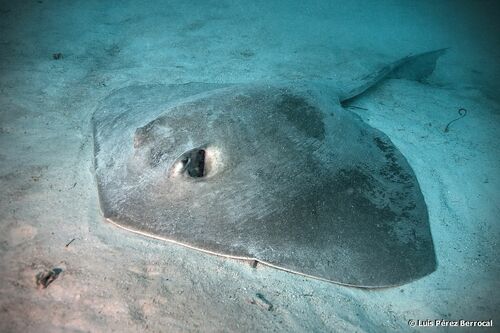
Broad Cowtail Stingray
Pastinachus ater
With its massive, diamond-shaped body and a distinctive flag-like tail, the Broad Cowtail Stingray is a majestic shadow of the Indo-Pacific's sandy flats. This master of camouflage is as ancient as it is beautiful, patrolling shallow lagoons and mangrove forests with effortless grace.
Quick Identification
Size
Disc width up to 2 meters (6.6 feet); total length including tail can exceed 3.5 meters (11.5 feet).
Colors
Uniform dark brown to charcoal black dorsal surface; creamy white or pale ventral side; the tail fold is typically darker or black.
Key Features
- Broad, diamond-shaped pectoral disc
- Long tail featuring a high, blackish ventral skin fold resembling a flag
- One or more venomous stings located midway down the tail
- Small eyes and a uniform, dark upper body without spots
When You’ll See Them
Geographic range
Where Does the Broad Cowtail Stingray Live?
This impressive ray is native to the vast Indo-Pacific region, flourishing in the warm coastal waters from East Africa and the Red Sea across to Southeast Asia and Northern Australia. It is a common sight along the coastlines of India, Thailand, and Indonesia, where it utilizes both shallow intertidal zones and deeper reef slopes. Their presence is particularly noted in the Great Barrier Reef and the sandy lagoons of various Pacific island nations where they frequent suburban canal systems.
Basemap © OpenStreetMap contributors
Behavior
The Broad Cowtail Stingray is a bottom-dwelling predator known for its distinctive "cowtail" skin fold on its tail. It spends much of its time cruising shallow sandy flats or resting partially buried in the substrate to avoid detection by predators like large sharks. Using electroreception, it can detect the tiny electrical pulses of prey hidden beneath the sand, which it then excavates using its powerful pectoral fins.
While generally solitary, these rays are occasionally seen in loose aggregations near nutrient-rich estuaries or during high tides when they move into mangrove forests to feed. They are wary of humans but are known to inhabit coastal areas with high foot traffic. If stepped on or threatened, they will use their venomous tail spine in self-defense, though they prefer to flee if given the opportunity.
EverydayEarth exclusive
Camera Tips
Capturing high-quality footage of a Broad Cowtail Stingray requires specialized underwater camera gear or an action camera mounted on a weighted tripod. The best placement is in shallow, clear-water estuaries or near the edges of mangrove roots during an incoming tide. Position the camera at a low angle, roughly 6-12 inches off the seabed, facing a sandy clearing where the rays are likely to forage for buried crustaceans. Ensure the tripod is heavy enough to withstand tidal currents without vibrating.
While traditional bait like oily fish or crushed crab can attract them, it often brings in unwanted scavengers or crabs that might obscure the lens. A more effective strategy for trail cams is placing the camera near natural bottlenecks, such as small channels leading into mangrove lagoons. Set your camera to record high-frame-rate video (60fps or higher) to capture the fluid, rippling motion of their pectoral fins, which is their most striking visual feature when they glide across the sand.
Because these rays are most active during tidal transitions, synchronize your deployments with the local tide chart. Early morning light offers the best visibility through the water column without the harsh glare of the midday sun. Ensure your camera housing is clean and free of salt spray or algae, as the Broad Cowtail Stingray’s dark silhouette requires high contrast against the sand for the AI to trigger successfully. Using a polarizing filter on your lens can also help reduce surface reflections if the camera is partially submerged.
Similar Species
Species that look similar or are commonly confused with Broad Cowtail Stingray.
Frequently Asked Questions
Record Broad Cowtail Stingray at your habitat
Connect a camera to start building your own species record — AI identifies every visitor automatically.