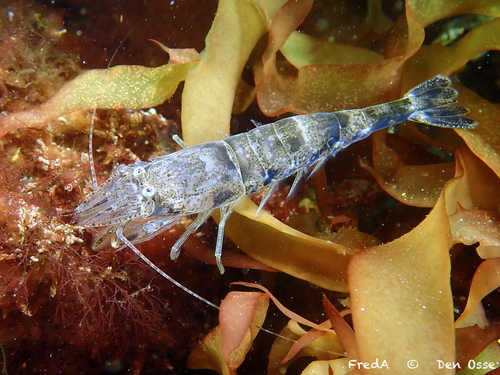
Brown Shrimp
Crangon crangon
The ultimate master of coastal camouflage, the Brown Shrimp is a fascinating nocturnal dweller of the sandy shallows. Watch closely, or you might miss this translucent marvel as it vanishes beneath the seafloor in the blink of an eye.
Quick Identification
Size
Typically 3 to 5 cm (1.2–2.0 inches) in length, though specimens can reach up to 9 cm (3.5 inches).
Colors
Translucent sandy-brown or greyish with dark speckles that mimic the seafloor; can change shade slightly to match the substrate.
Key Features
- Mottled sandy-brown camouflage
- Flattened body shape for burying in sediment
- First pair of walking legs have small, hook-like pincers
- Two pairs of long antennae used for sensing prey
When You’ll See Them
Geographic range
Where Does the Brown Shrimp Live?
The Brown Shrimp is a quintessential resident of the northeastern Atlantic Ocean's coastal fringes. Its expansive range stretches from the frigid White Sea in northern Russia down to the warmer Atlantic shores of Morocco, covering the entire coastline of Western Europe. They are particularly abundant in the southern North Sea and are also found throughout the brackish waters of the Baltic Sea, as well as the Mediterranean and Black Seas.
Basemap © OpenStreetMap contributors
Behavior
The Brown Shrimp is a master of camouflage and a cornerstone of the coastal ecosystem. During the day, they are largely sedentary and secretive, using their legs to kick up sand and bury themselves until only their eyes and antennae remain visible. This behavior protects them from sharp-eyed predators like gulls and flatfish. They are highly attuned to the rhythm of the tides, often moving up the shore with the incoming tide to feed and retreating as the water falls.
These shrimp are primarily nocturnal, becoming far more active once the sun sets. When threatened, they utilize a rapid 'tail-flip' response, snapping their muscular abdomen to dart backward into the water column and escape danger. While they are generally solitary, they can be found in massive densities in nutrient-rich estuaries, where thousands may occupy a single square meter of seabed.
EverydayEarth exclusive
Camera Tips
Capturing the Brown Shrimp requires a specialized approach, as they are aquatic and excel at hiding. For those with 'backyards' that include tide pools or private docks, the best setup is a waterproof action camera with macro capabilities. Place the camera in a shallow, sandy-bottomed pool during low tide. Because these shrimp bury themselves, you may not see them initially; positioning the camera near a small piece of bait, like a crushed mussel, will encourage them to emerge from the sand and provide excellent close-up footage of their feeding behavior.
Lighting is your biggest challenge underwater. If you are filming at night—when they are most active—use a submerged, diffused red light. Many crustaceans are less sensitive to red light, which allows you to observe their natural behavior without triggering their escape response. Set your camera to a high frame rate (60fps or higher) to capture their lightning-fast tail-flicks if they decide to dart away.
Timing is everything. Use a tide chart to plan your camera placement. The best footage is often captured just as the tide begins to flood into a pool, as the influx of fresh water triggers a flurry of activity. Ensure your camera is securely weighted or mounted to a heavy baseplate, as even slight wave action can shift the frame or bury the lens in the sand.
Frequently Asked Questions
Record Brown Shrimp at your habitat
Connect a camera to start building your own species record — AI identifies every visitor automatically.