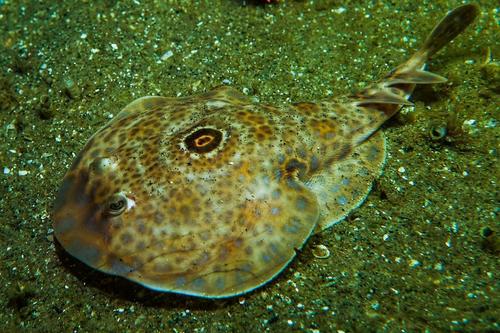
Bullseye Electric Ray
Diplobatis ommata
The Bullseye Electric Ray is a miniature marvel of the Pacific shallows, sporting a stunning 'eye' on its back to confuse predators. Though small, this shocking resident of the sandy seafloor is a master of camouflage and coastal survival.
Quick Identification
Size
A small species reaching up to 25 cm (9.8 in) in length
Colors
Variable light to dark brown dorsal side with an iconic central 'bullseye' eyespot (ocellus) featuring concentric rings of black, yellow, and white
Key Features
- Distinctive large central eyespot on the disc
- Rounded pectoral fins
- Short, thick tail with two dorsal fins
- Small, protruding mouth on the underside
When You’ll See Them
Geographic range
Where Does the Bullseye Electric Ray Live?
The Bullseye Electric Ray is native to the tropical and subtropical waters of the Eastern Central Pacific. Its range begins in the northern Gulf of California and extends southward along the coastlines of Central America, reaching as far south as the coastal waters of Ecuador. It is most commonly found in the shallowest parts of the continental shelf, rarely venturing into deep offshore waters.
Basemap © OpenStreetMap contributors
Behavior
The Bullseye Electric Ray is a sedentary bottom-dweller that spends much of its life partially buried in the sand or fine silt of the seafloor. It is a master of disguise, using its highly variable coloration and its ability to remain perfectly still to avoid detection by predators like sharks and larger rays. Despite its small size, it possesses a unique defense mechanism: specialized kidney-shaped organs in its disc that can generate a mild electric shock to deter threats or stun small prey.
While generally solitary, these rays are often found in high densities in favorable habitats. They are not aggressive toward humans, but they can deliver a surprising jolt if stepped on or handled. Their movement is relatively sluggish compared to other rays, relying on the muscles of their thick tail for propulsion rather than the 'flapping' motion seen in stingrays or mantas.
EverydayEarth exclusive
Camera Tips
Capturing a Bullseye Electric Ray on camera requires an underwater setup, such as a GoPro or a specialized trail camera in a waterproof housing. Because these rays prefer the 'intertidal' and shallow sub-tidal zones, you should place your camera in sandy patches near rocky reef edges or in calm bays. Use a weighted tripod or a sand-stake mount to prevent the camera from being moved by the surge or tide. Position the lens at a low angle, roughly 4 to 6 inches off the seabed, to get a clear profile of the ray's unique shape.
Since these rays are often buried with only their eyes and the 'bullseye' pattern showing, high-definition video (4K) is preferable to still photos. This allows you to spot the subtle movement of their spiracles (breathing holes) or the slight puff of sand when they move. If setting the camera for nighttime recording, ensure you have a diffused red-light or low-intensity LED video light; white light can sometimes wash out their intricate patterns or cause them to bury themselves deeper.
Time-lapse mode is an excellent strategy for this species. Set your camera to take a photo every 5-10 seconds over a two-hour window during a rising tide. As the water moves in, these rays often become more active, shifting positions to find better feeding grounds. Look for areas with small mounds of sand or 'pits' which indicate recent foraging activity by rays or other bottom-dwellers.
Frequently Asked Questions
Record Bullseye Electric Ray at your habitat
Connect a camera to start building your own species record — AI identifies every visitor automatically.