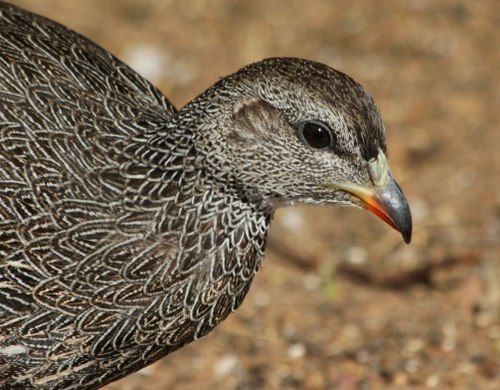
Cape Spurfowl
Pternistis capensis
The largest of South Africa's francolins, the Cape Spurfowl is a bold and raucous character that has turned the suburban gardens of the Western Cape into its personal playground. With its striking orange legs and intricate grey-and-white feathers, it is a rewarding species to discover on any backyard camera.
Quick Identification
Size
40–43 cm (16–17 in) in length; weighs between 600–915 g (1.3–2.0 lbs)
Colors
Dark grey-brown plumage with fine white vermiculations; bright orange-red legs; dark bill with a dull red base; pale face and throat
Key Features
- Intricate white-on-grey wavy feather patterns
- Bright orange-red legs and feet
- Large, stocky build (largest spurfowl in the region)
- Distinctive raucous, cackling call
- Males possess two sharp leg spurs
When You’ll See Them
Geographic range
Where Does the Cape Spurfowl Live?
Native to the southern reaches of the African continent, the Cape Spurfowl is primarily concentrated in the Western Cape province of South Africa. Its range follows the coastline northward into the Northern Cape and extends locally into the arid regions of southern Namibia. This species thrives in the Mediterranean climate of the Cape, successfully bridging the gap between wild fynbos and human-altered suburban landscapes.
Basemap © OpenStreetMap contributors
Behavior
In suburban environments, they have become remarkably bold, often foraging in gardens and even waiting for residents to provide supplementary feed. They spend much of their day scratching at the soil for food but are careful to stay near 'scrubby' cover. At night, they abandon the ground to roost safely in the branches of thick trees or large alien shrubs, which protects them from terrestrial predators like caracals and mongooses.
EverydayEarth exclusive
Camera Tips
To capture the best footage of the Cape Spurfowl, place your AI-powered camera at a low angle, roughly 10 to 15 inches off the ground. These birds are terrestrial and spend almost all their daylight hours on foot, so a ground-level perspective will provide the most intimate look at their plumage and social behaviors. Look for 'scuff marks' in the dirt or mulch—areas where they have been scratching for insects—and aim your camera there.
Baiting is an excellent way to attract this species and keep them in the camera's field of view. A handful of wild bird seed, cracked corn, or even leftover vegetable scraps will usually bring the whole covey in for a visit. They are creatures of habit; if you find them in your garden once, they are likely to return at roughly the same time every day, usually in the early morning or late afternoon as the light begins to soften.
Because they travel in groups, use a camera setting that captures a short video clip (15-30 seconds) rather than just a single still image. This allows you to see the hierarchy within the covey and hear their distinctive vocalizations. During the dry summer months in the Cape, a low-profile water feature or a shallow basin of water at ground level is an irresistible draw for these birds and will often result in wonderful 'action shots' of them drinking or bathing.
Similar Species
Species that look similar or are commonly confused with Cape Spurfowl.
Frequently Asked Questions
Record Cape Spurfowl at your habitat
Connect a camera to start building your own species record — AI identifies every visitor automatically.