Carpet Python
Morelia spilota
The Carpet Python is nature’s master of camouflage, a stunningly patterned constrictor that thrives from wild rainforests to suburban backyards. Known for its calm temperament and impressive size, it is a fascinating and helpful neighbor for any wildlife enthusiast.
Quick Identification
Size
Length typically 2 to 4 metres (6.5 to 13 feet); weight varies by subspecies, ranging from 2 to 15 kg (4.4 to 33 lbs).
Colors
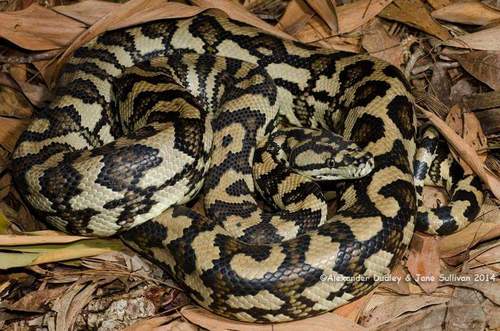
Highly variable patterns of black, olive, gold, and cream in 'carpet-like' blotches; belly is usually cream or yellow with dark spots.
Key Features
- Triangular head distinct from the neck with heat-sensing pits on the lower jaw
- Intricate, geometric patterns resembling a woven carpet
- Stocky, muscular body with a prehensile tail for climbing
When You’ll See Them
Geographic range
Where Does the Carpet Python Live?
The Carpet Python is native to the Australasian region, maintaining a massive presence across almost the entire Australian continent, excluding only the most arid central deserts and Tasmania. Its range extends north into the tropical landscapes of New Guinea and throughout the diverse island chains of the Bismarck Archipelago and the northern Solomon Islands. This broad distribution makes it one of the most widespread and frequently encountered large snakes in the Southern Hemisphere.
Basemap © OpenStreetMap contributors
Behavior
The Carpet Python is a versatile and semi-arboreal predator known for its patience. As ambush hunters, they often find a comfortable perch in a tree or a secluded spot in a roof cavity, where they can remain motionless for days waiting for prey to pass by. Despite their large size, they are masters of camouflage, blending seamlessly into the dappled light of the forest floor or the shadows of suburban gardens.
While generally solitary and non-aggressive toward humans, they are highly adaptive to urban environments. In suburban areas, they are often welcomed by residents for their role in controlling rodent populations. They are most active at night, utilizing their sophisticated heat-sensing pits to track warm-blooded prey in total darkness, though they are frequently seen basking in the sun during the day to regulate their body temperature.
EverydayEarth exclusive
Camera Tips
To capture high-quality footage of a Carpet Python, focus your AI camera on 'high-traffic' reptile corridors. These snakes love verticality, so position your camera to face fence railings, low-hanging tree branches, or the top of garden retaining walls. Since they are ectothermic, they are frequently spotted basking in the morning sun on tin roofs or rocky outcrops; angling your camera toward these sun-drenched spots between 8 AM and 10 AM can yield excellent daytime shots.
During the night, ensure your camera's Infrared (IR) settings are optimized. Carpet Pythons are most active after dark, especially when hunting rodents. If you have a garden shed, a woodpile, or a compost bin, place the camera at chest height (about 1 to 1.5 metres) aiming toward these structures. You don't need artificial lures; the natural presence of local wildlife like rats or possums acts as the 'bait' that will eventually bring a python into the frame.
Setting the trigger sensitivity to 'High' is crucial for these snakes. While large, Carpet Pythons move with a slow, fluid motion that can sometimes fail to trigger less sensitive sensors. Use a wide-angle lens setting if available to capture their full length, as a 3-metre snake can easily be cut off in a tight frame. In the late winter or early spring, look for 'combat' behavior where two males intertwine in a wrestling match—this is a spectacular sight for any trail camera owner.
Frequently Asked Questions
Record Carpet Python at your habitat
Connect a camera to start building your own species record — AI identifies every visitor automatically.