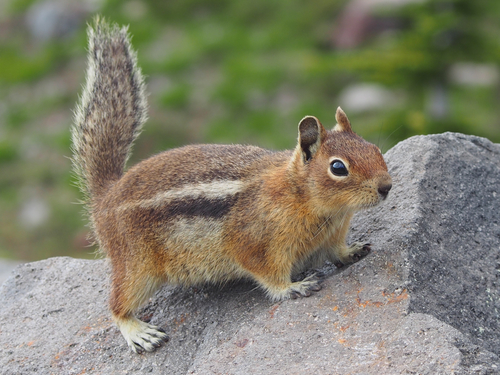
Cascade Golden-mantled Ground Squirrel
Callospermophilus saturatus
The largest of the golden-mantled squirrels, this vibrant mountain dweller is a master of the high Cascades. With its brilliant tawny shoulders and bold personality, it is a highlight for any nature enthusiast exploring the Pacific Northwest peaks.
Quick Identification
Size
28–32 cm (11–12.6 in) in length; 200–450 g (7–16 oz) in weight
Colors
Tawny or golden-cinnamon head and shoulders; grey-brown body with a white stripe on each side bordered by black; pale cream belly
Key Features
- Golden-brown head and shoulders without stripes
- White lateral stripe on body bordered by thick black lines
- Larger and deeper-colored than other golden-mantled species
- No stripes on the face (unlike chipmunks)
When You’ll See Them
Geographic range
Where Does the Cascade Golden-mantled Ground Squirrel Live?
This specialized rodent is native to the Pacific Northwest region of North America. Its geographic range is strictly confined to the Cascade Mountain range, extending from south-central British Columbia in Canada through the mountains of Washington State in the United States. Because it is a high-altitude specialist, it is rarely found in the lowlands or coastal regions, remaining anchored to the rugged mountain spine of the PNW.
Basemap © OpenStreetMap contributors
Behavior
The Cascade Golden-mantled Ground Squirrel is a social but largely independent forager, frequently seen darting across logs or sunning itself on rocky outcrops. While they are primarily ground-dwellers, they are agile climbers and will often scale low branches to reach berries or gain a better vantage point. They are quite bold around humans in recreational areas, but they remain highly vigilant, using high-pitched alarm calls to warn others of hawks, eagles, or weasels.
These squirrels are true hibernators, spending up to seven months of the year in deep underground burrows. During their active months, they are remarkably industrious, using their internal cheek pouches to transport large quantities of seeds and fungi to their dens. They are typically solitary in their burrows except during the breeding season or when females are raising their young in late spring and early summer.
EverydayEarth exclusive
Camera Tips
To capture the best footage of the Cascade Golden-mantled Ground Squirrel, position your camera near "scout posts"—high points like flat rocks, stumps, or fallen logs where they pause to survey their surroundings. Set the camera low to the ground, about 6 to 10 inches high, and angle it slightly upward. This eye-level perspective captures their expressive faces and the intricate detail of their golden fur much better than a top-down angle.
Using a small lure can significantly increase your success. A handful of unsalted sunflower seeds or walnuts placed in a sunny patch will keep them in the frame for longer periods. These squirrels are most active on clear, sunny days; they tend to stay in their burrows during heavy rain or overcast weather, so focus your monitoring on high-pressure weather windows. Ensure your camera is set to a fast trigger speed or high-frame-rate video to catch their quick, erratic movements.
Timing is everything with this species. Because they hibernate, they are completely absent from late October through April. The best window for camera activity is late summer (August and early September), when adults are frantically foraging to build fat reserves and the year's juveniles have emerged to explore. Look for areas with "edge habitat," where thick forest meets open rocky slides or meadows, as these are their preferred high-traffic zones.
Similar Species
Species that look similar or are commonly confused with Cascade Golden-mantled Ground Squirrel.
Frequently Asked Questions
Record Cascade Golden-mantled Ground Squirrel at your habitat
Connect a camera to start building your own species record — AI identifies every visitor automatically.