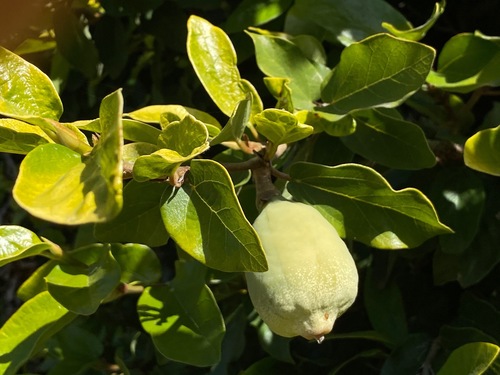
Climbing fig
Ficus pumila
A vigorous evergreen climber that turns cold stone into living walls. Known for its tiny heart-shaped leaves and incredible climbing ability, it creates a vertical playground for backyard wildlife.
Quick Identification
Size
Juvenile leaves 1-2.5 cm (0.4-1 in); mature vines can climb up to 9-12 meters (30-40 ft)
Colors
Bright green to dark emerald juvenile leaves; mature foliage is leathery and dark green; stems are woody and brownish-gray
Key Features
- Dimorphic foliage with small heart-shaped juvenile leaves and larger oval adult leaves
- Vigorous climbing habit using adhesive aerial rootlets
- Pear-shaped green fruits that ripen to a dull purple
- Dense, carpet-like growth pattern on vertical surfaces
When You’ll See Them
Geographic range
Where Does the Climbing fig Live?
Native to the humid regions of East Asia, including China, Japan, and Vietnam, the Climbing Fig has spread widely as a popular landscape plant. In the United States, it is most common in the southeastern and south-central states, specifically from Florida across the Gulf Coast to Texas and up into coastal California. It is frequently seen in urban and suburban environments throughout tropical and subtropical regions of South America, Australia, and South Africa, where it often escapes cultivation to cover local infrastructure.
Basemap © OpenStreetMap contributors
Behavior
The Climbing Fig is a remarkable woody evergreen liana known for its two distinct growth phases. In its juvenile stage, it produces tiny, delicate leaves that lie flat against a surface, creating a lush green tapestry. As the plant reaches the top of its support or matures, it transitions into an adult phase characterized by thick, leathery leaves and horizontal woody branches that stick out from the wall. Unlike the juvenile stems, these adult branches produce large, pear-shaped figs.
This species is a master of vertical colonization. It uses powerful adhesive rootlets to cling to stone, wood, and brick with incredible strength, often making it difficult to remove without damaging the underlying structure. In the wild and in suburban landscapes, it provides dense cover and nesting sites for small birds and a hunting ground for lizards and predatory insects.
EverydayEarth exclusive
Camera Tips
Capturing the Climbing Fig with an AI camera is less about the plant's movement and more about using it as a 'wildlife stage.' Because this vine creates a dense, multi-layered vertical habitat, it is a magnet for backyard biodiversity. Position your camera at eye level, roughly 3 to 5 feet from a well-established wall of fig, to capture the lizards (like anoles) and insects that treat the leaves as a highway. If the plant has reached its mature phase and is producing fruit, angle the camera to overlook the woody branches, as these are prime landing spots for birds.
For those interested in the plant's growth, use a time-lapse setting. Set your camera to take one photo every 6 to 12 hours over the course of several months. This will reveal the 'crawling' motion of the juvenile stems as they seek out new surface area. Ensure your camera is mounted on a stable tripod or post rather than the vine itself, as the plant's weight and growth can shift the camera's field of view over time.
To highlight the texture of the leaves, side-lighting is key. Early morning or late afternoon sun provides long shadows that emphasize the heart-shaped patterns of the juvenile foliage. If your camera has a macro mode or a high-resolution sensor, focus on the point where the aerial roots meet the wall—this is a fascinating area to observe small invertebrates like spiders and ants that live within the micro-crevices created by the vine.
Similar Species
Species that look similar or are commonly confused with Climbing fig.
Frequently Asked Questions
Record Climbing fig at your habitat
Connect a camera to start building your own species record — AI identifies every visitor automatically.