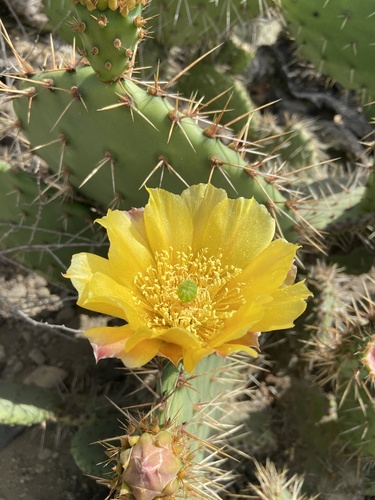
Coastal Pricklypear
Opuntia littoralis
The sprawling architect of the California coast, the Coastal Pricklypear is a fortress for wildlife and a burst of color on the bluffs. From its sun-drenched yellow blooms to its deep purple fruits, it is a year-round magnet for birds, mammals, and pollinators.
Quick Identification
Size
Stands 1-3 feet (30-90 cm) tall; forms sprawling mats 3-10 feet (1-3 meters) wide
Colors
Dull green to bluish-green pads; yellow flowers; dark red to deep purple fruit
Key Features
- Low-growing, sprawling habit often forming dense thickets
- Oval to diamond-shaped pads 2-7 inches long
- Yellow flowers with greenish centers
- Long, yellowish spines up to 1.5 inches
When You’ll See Them
Geographic range
Where Does the Coastal Pricklypear Live?
The Coastal Pricklypear is native to the western edge of North America, hugging the rugged coastline of the Pacific. Its primary range is concentrated in Southern California, extending from the sandy bluffs of Santa Barbara down through the bustling coastal communities of San Diego. It is also a signature plant of the Channel Islands and stretches south into the Baja California peninsula of Mexico, where it thrives in the unique transition zone between the ocean and the desert.
Basemap © OpenStreetMap contributors
Behavior
The Coastal Pricklypear is a foundation species of the coastal sage scrub ecosystem. Unlike its upright cousins, this cactus grows close to the ground, spreading horizontally through the rooting of fallen pads. This growth pattern creates a complex, thorny infrastructure that provides vital protection for small animals like desert cottontails and woodrats, who use the spines as a fortress against larger predators.
Its lifecycle is synchronized with the Mediterranean climate of the Pacific coast. It remains dormant during the dry summer months, puts on new growth following winter rains, and produces a spectacular display of yellow blooms in late spring. These flowers are a hub of activity, attracting a diverse array of native bees and beetles who wallow in the pollen-rich centers.
For humans and wildlife alike, the late summer brings a harvest of "tunas" or prickly pear fruits. These dark purple fruits are a critical moisture and sugar source for coyotes, foxes, and various bird species during the hottest months of the year. In a backyard setting, this cactus acts as a 24/7 wildlife service station, offering both a high-calorie snack bar and a high-security nursery.
EverydayEarth exclusive
Camera Tips
To capture the most action, position your camera at a low angle (6-12 inches off the ground) facing a patch of Coastal Pricklypear fruit during late summer. Many animals, including coyotes, raccoons, and even the Greater Roadrunner, will visit the cactus to feed on the ripe purple tunas. A side-view angle is best to see the animals maneuvering around the spines.
If your camera has a time-lapse mode, target a single flower bud in late May. These flowers open and close in response to sunlight, and a time-lapse can capture the dramatic transition from a tight bud to a brilliant yellow bloom in just a few hours. Ensure the camera is secured to a heavy stake, as the coastal winds can cause motion-triggering errors if the camera isn't steady.
Because these cacti often grow in dense mats, they create natural "tunnels" underneath their pads. If you spot a small opening at the base of the cactus, place your camera facing that gap. You are likely to catch footage of brush rabbits, lizards, or woodrats using the cactus as a safe passage to escape overhead hawks.
Nighttime is surprisingly busy around the Coastal Pricklypear. Many nocturnal mammals will visit the plant to forage for fallen fruit or to hunt insects attracted to the plant's moisture. Set your camera to a high-sensitivity PIR (Passive Infrared) setting, as the movement of a small rodent or a fox against the heat-retaining pads of the cactus can be subtle but rewarding to capture.
Frequently Asked Questions
Record Coastal Pricklypear at your habitat
Connect a camera to start building your own species record — AI identifies every visitor automatically.