Coffee Bush
Clausena excavata
A fragrant staple of Southeast Asian gardens, the Coffee Bush is a vibrant evergreen famous for its translucent pink berries and its role as a bustling hub for butterflies and songbirds.
Quick Identification
Size
Stands 1–2 metres (3.3–6.6 feet) tall, occasionally reaching 3 metres in ideal conditions.
Colors
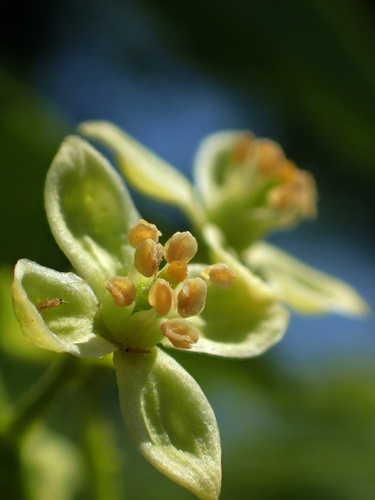
Glossy dark green leaves; yellowish-white flowers; translucent pink to ruby-red berries when ripe.
Key Features
- Pungent, resinous odor when leaves are crushed
- Compound leaves with 15–30 narrow, asymmetrical leaflets
- Clusters of small, fleshy, pinkish-red berries
- Smooth, light-grey to brown bark
When You’ll See Them
Geographic range
Where Does the Coffee Bush Live?
Native to the tropical and subtropical regions of South and Southeast Asia, the Coffee Bush has a wide footprint that begins in the Indian subcontinent and Nepal, stretching across Southern China and Taiwan. It is a common and vital part of the ecosystem throughout the Malay Peninsula, Indonesia, the Philippines, and Indochina. While not widely naturalized outside its native range, it is a staple of tropical backyard habitats across these regions.
Basemap © OpenStreetMap contributors
Behavior
The Coffee Bush, also known as the Pink Lime-berry, is a resilient evergreen shrub known for its distinct aromatic profile. While it doesn't move like the animals usually tracked on EverydayEarth, it serves as a high-traffic hub for backyard biodiversity. In the wild and in suburban gardens, it functions as a primary host plant for several swallowtail butterfly species. Its growth is steady, thriving in the understory of forests or as a hardy hedge in residential areas.
Interaction with humans is primarily medicinal and culinary in Southeast Asia, where the leaves are used in traditional folk medicine. For the backyard observer, the plant's 'behavior' is best seen through its seasonal cycles: a burst of small, white flowers followed by a heavy fruiting season that attracts a variety of frugivorous (fruit-eating) birds. It is a tough plant that can tolerate poor soil but responds vigorously to tropical humidity and regular sunlight.
EverydayEarth exclusive
Camera Tips
To capture the true magic of a Coffee Bush, position your AI-powered camera about 1 to 1.5 metres off the ground, angled slightly downward to face the fruit clusters. This is the 'hot zone' where you will catch Yellow-vented Bulbuls and other small birds as they land to feast on the pink berries. Use a high-sensitivity motion trigger or a time-lapse setting to capture the transition from flower to fruit over several weeks.
Because the Coffee Bush is a primary host for butterflies like the Common Mormon, try placing a macro lens or a close-up focal setting on a specific branch of young leaves. You can record the fascinating life cycle from tiny eggs to 'bird-dropping' camouflaged caterpillars. For the best lighting, ensure the camera faces North or South to avoid the direct glare of the tropical sun reflecting off the glossy leaves, which can blow out the image highlights.
If you are looking for nocturnal visitors, keep the infrared (IR) flash enabled. While the plant itself is static, the pungent leaves often attract small nocturnal mammals or stick insects that use the dense foliage for cover. Avoid placing the camera too deep inside the bush; instead, aim for the 'edge' where the plant meets an open path, as this is where wildlife is most likely to be captured in clear view as they approach for a snack.
Frequently Asked Questions
Record Coffee Bush at your habitat
Connect a camera to start building your own species record — AI identifies every visitor automatically.