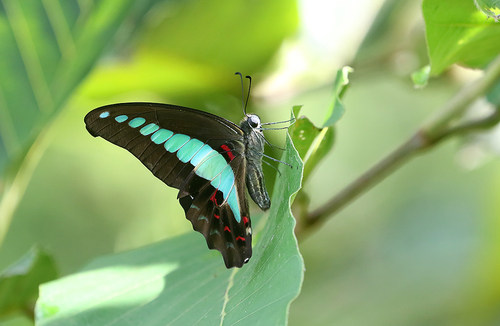
Common Bluebottle
Graphium sarpedon
With a flash of electric turquoise against velvet black, the Common Bluebottle is a master of high-speed aerial acrobatics. A frequent visitor to Asian and Australian backyards, this stunning swallowtail is a favorite for garden observers and photographers alike.
Quick Identification
Size
Wingspan of 55–75 mm (2.2–3.0 inches)
Colors
Deep velvety black to dark brown wings featuring a brilliant, translucent aquamarine or turquoise median band; males and females look similar, though males often have more vibrant coloring.
Key Features
- Continuous translucent turquoise-blue band across both wings
- Angular, triangular wing shape without tails
- Rapid, zigzagging flight pattern
- Small red and white spots visible on the wing undersides
When You’ll See Them
Geographic range
Where Does the Common Bluebottle Live?
The Common Bluebottle is native to a vast stretch of the Eastern Hemisphere, originating in the tropical and subtropical regions of South and Southeast Asia. Its core range extends from the Indian subcontinent through China and Japan, reaching down through the Indonesian archipelago. In the southern part of its range, it is a common and beloved resident of the eastern coastline of Australia, where it thrives from the northern tip of Queensland down into New South Wales. This species has adapted remarkably well to human environments, making it a frequent visitor to urban centers across these countries.
Basemap © OpenStreetMap contributors
Behavior
The Common Bluebottle is one of the most energetic and restless butterflies you are likely to encounter. Unlike many other species that flutter leisurely, the Bluebottle is known for its exceptionally fast, erratic flight. They are highly territorial and can often be seen 'patrolling' a specific area of a garden or forest edge, chasing away other butterflies that venture too close to their preferred perches.
A fascinating social behavior of the Common Bluebottle is 'mud-puddling.' Groups of males frequently congregate on damp soil, sand, or the banks of puddles to sip mineral-rich water. This behavior provides them with essential salts and nutrients that are passed to the female during mating. While they spend much of their time high in the canopy of trees, they descend frequently to gardens to feed on nectar-rich flowers.
EverydayEarth exclusive
Camera Tips
Capturing the Common Bluebottle on camera requires speed and strategy because of its rapid flight. To get a clear shot, position your AI-powered camera near high-traffic 'refueling stations.' Planting nectar-rich flowers like Lantana or Pentas in a sunny spot is the best way to lure them into frame. Set your camera at a height of 3 to 4 feet, angled slightly upward toward the flower heads to capture the translucency of their blue wing bands against the sunlight.
Because these butterflies move quickly, use a high shutter speed or a 'burst' mode if your camera supports it. If you are using a trail camera for backyard monitoring, place it near host plants like the Camphor Laurel tree. Females will hover slowly around the new growth of these trees when searching for a place to lay eggs, providing a much better window for a clear image than when they are in full flight.
For the most dramatic shots, try to find a 'mud-puddling' spot. If you have a damp area in your garden or a birdbath with a shallow, muddy edge, focus your camera there. Males will often remain stationary for several minutes while drinking, allowing for high-detail macro shots that reveal the intricate red and white spots on their underwings. Early morning, just as the sun hits the garden, is the best time for this, as they need the warmth to activate but are less flighty than in the midday heat.
Frequently Asked Questions
Record Common Bluebottle at your habitat
Connect a camera to start building your own species record — AI identifies every visitor automatically.