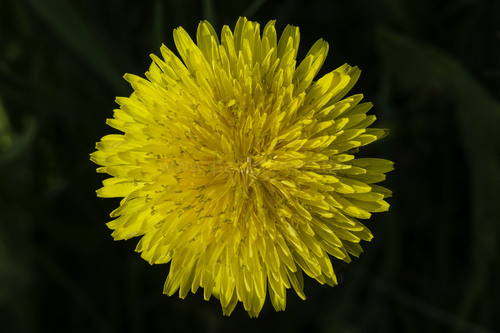
common dandelion
Taraxacum officinale
The common dandelion is a resilient pioneer of the plant world, transforming suburban lawns into vibrant yellow meadows. A vital lifeline for early-spring pollinators, this sunny wildflower hides a complex architecture beneath its humble appearance.
Quick Identification
Size
Height of 5-40 cm (2-16 in); flower heads 2-5 cm (0.8-2 in) wide.
Colors
Bright yellow flower heads; deep green serrated leaves; white, feathery seed heads.
Key Features
- Deeply lobed, tooth-like leaves forming a basal rosette
- Single yellow flower head atop a hollow, leafless stem
- Produces a milky white sap when broken
- Spherical white seed 'clock' comprised of many tufted fruits
When You’ll See Them
Geographic range
Where Does the common dandelion Live?
Native to the temperate regions of Europe and Asia, the common dandelion has successfully naturalized across almost every continent on Earth. It is now found ubiquitously throughout North America, from the high Arctic to the tropics, and has established significant populations across South America, Australia, and New Zealand. This incredible range is a testament to its status as one of the most successful and widespread flowering plants in the world.
Basemap © OpenStreetMap contributors
Behavior
The common dandelion is a master of survival, utilizing a deep taproot to reach moisture and nutrients while remaining anchored against most attempts at removal. One of its most fascinating behaviors is nyctinasty, where the flower heads close tightly at night or during rainy weather to protect their pollen, reopening with the morning sun. This heliotropic nature ensures they are always positioned to maximize energy from the sun during their peak blooming hours.
Beyond their movement, dandelions are highly opportunistic colonizers. They are among the first plants to emerge in early spring, providing a critical initial food source for emerging bees and other pollinators. Their life cycle is rapid; once the yellow petals wither, the plant quickly develops its iconic 'blowball' seed head. A single plant can produce thousands of seeds per year, which are expertly designed to catch the slightest breeze and travel miles from the parent plant.
For humans, the dandelion has a complex relationship. While often maligned as a stubborn lawn weed, it has a long history of medicinal and culinary use. The entire plant is edible, from the vitamin-rich leaves to the bitter roots used in teas and coffee substitutes. In a backyard setting, they act as soil improvers, their deep roots breaking up compacted earth and bringing minerals from the subsoil to the surface where other plants can access them.
EverydayEarth exclusive
Camera Tips
Capturing the common dandelion with an AI-powered camera offers a unique opportunity to document the micro-ecosystem of your backyard. To get the best results, place your camera on a low-profile mount or a small tripod only a few inches off the ground. Angling the lens slightly upward against the sky can create a dramatic 'bug's-eye view' that highlights the intricate structure of the yellow florets or the delicate geometry of the seed head.
While the plant itself is stationary, it acts as a natural lure for wildlife. Set your camera's trigger sensitivity to high and focus on a particularly vibrant bloom. This is the best way to capture high-quality images of pollinators like honeybees, hoverflies, and small butterflies that visit the dandelion for its early-season nectar. If your camera supports time-lapse mode, schedule it to take a photo every 15 minutes from dawn until dusk; this will allow you to see the flower head follow the sun and close up as the evening approaches.
Lighting is crucial for these bright yellow subjects. Early morning or late afternoon 'golden hour' light prevents the yellow petals from looking washed out or 'blown out' in digital images. If your camera allows for manual exposure adjustments, slightly underexposing the image can help preserve the rich details in the bright yellow center. During the seed stage, backlit shots—where the sun is behind the dandelion—will make the white feathery seeds (pappus) glow brilliantly, creating stunning, professional-grade nature photography.
Finally, consider the seasonal transition. Capturing the same plant over a week-long period as it transforms from a yellow bud to a golden flower and finally into a translucent seed clock is a fantastic project for backyard naturalists. If you are using a trail camera with infrared (IR) capabilities, you may even catch nocturnal visitors, such as rabbits or deer, foraging on the nutrient-dense leaves under the cover of night.
Frequently Asked Questions
Record common dandelion at your habitat
Connect a camera to start building your own species record — AI identifies every visitor automatically.