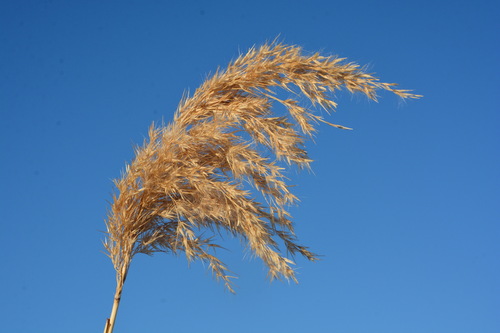
common reed
Phragmites australis
Standing tall as the sentinels of the marsh, common reeds create the ultimate hideout for elusive wetland wildlife. These towering grasses are more than just plants—they are the architectural backbone of the world's most productive ecosystems.
Quick Identification
Size
Height: 2–6 meters (6–20 feet); Stem diameter: 5–15 mm (0.2–0.6 inches)
Colors
Dull green to blue-green leaves; stems turn golden-brown in winter; seed heads are purplish when young, turning silvery-tan and feathery at maturity
Key Features
- Towering height up to 20 feet
- Large, feathery flower plumes (panicles) at the top
- Flat, sharp-edged leaves up to 20 inches long
- Hollow, bamboo-like stems that persist through winter
- Extensive underground rhizome network
When You’ll See Them
Geographic range
Where Does the common reed Live?
Native to nearly every corner of the globe, the common reed is one of the most widely distributed flowering plants on Earth. It thrives across Europe and Asia, spans the breadth of North America, and maintains a strong presence throughout Africa and Australia. While it provides vital habitat in its native ranges, introduced lineages have become highly successful—and often problematic—colonizers in many New World wetlands.
Basemap © OpenStreetMap contributors
Behavior
Common reed is a highly successful perennial grass known for its aggressive growth and ability to form massive, dense colonies known as reed beds. It primarily spreads through a network of underground rhizomes and horizontal runners (stolons) that can grow several meters in a single season. This allows the plant to quickly dominate wetland edges, often outcompeting other native vegetation to create a monoculture that provides unique habitat for various species.
While often viewed as invasive in certain regions due to its ability to clog waterways, common reeds play a complex role in the ecosystem. They act as powerful natural filters, absorbing excess nutrients and heavy metals from the water. For humans, they have historically been used for everything from thatched roofing to musical instruments, though modern interactions usually involve managing their spread in suburban retention ponds and coastal marshes.
EverydayEarth exclusive
Camera Tips
Capturing the beauty of common reed—and the creatures that hide within it—requires a focus on the 'edge effect.' Rather than placing your camera deep inside a thicket where the moving leaves will cause endless false triggers, aim your lens at the boundary where the reeds meet open water or a grassy bank. This is the 'highway' for wetland mammals like muskrats, minks, and otters who use the reeds for cover but forage in the open.
If you are using an AI-powered camera like those from EverydayEarth, wind is your biggest challenge. To minimize 'ghost' triggers from swaying stems, use a sturdy T-post or a heavy-duty tripod stake driven deep into the mud rather than attaching the camera to the plants themselves. Set your camera’s sensitivity to 'Medium' and ensure your 'Detection Zone' excludes the tallest, most wind-prone plumes to focus on the ground-level movement of animals.
For the best visual results, leverage the reed's aesthetic qualities. During late summer and autumn, the feathery plumes are highly reflective. Position your camera facing East or West to catch the low-angle sun; the resulting backlight will make the reeds glow and provide a high-contrast background that helps AI models better identify birds like Bitterns or Red-winged Blackbirds perched on the stalks. In winter, the golden, dried stalks provide excellent camouflage for your camera—wrap your device in a brown or tan camo skin to blend perfectly into the dormant reed bed.
Similar Species
Species that look similar or are commonly confused with common reed.
Frequently Asked Questions
Record common reed at your habitat
Connect a camera to start building your own species record — AI identifies every visitor automatically.