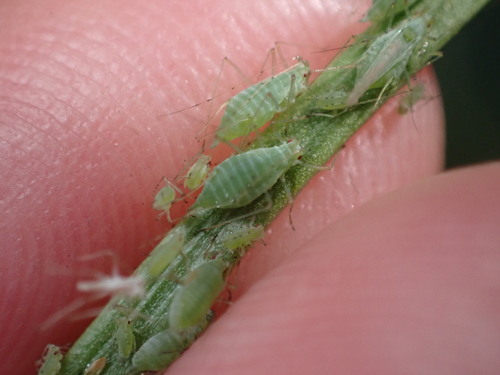
Cotton Aphid
Acyrthosiphon gossypii
The Cotton Aphid is a tiny marvel of the insect world, known for its incredible reproductive speed and its unique 'farming' relationship with local ant colonies.
Quick Identification
Size
1.2 to 2.5 mm (0.05 to 0.1 inches) in length
Colors
Variables shades of pale yellow, lime green, or dark dull green; antennae and rear siphunculi are typically darker or blackish.
Key Features
- Tiny pear-shaped body
- Pair of dark, pipe-like siphunculi on the abdomen
- Long antennae that reach at least halfway down the body
- Often found in dense clusters on the undersides of leaves
When You’ll See Them
Geographic range
Where Does the Cotton Aphid Live?
Originally native to the warmer regions of the Old World, this species thrives across the Indian subcontinent with significant populations in India and Sri Lanka. It also maintains a strong presence across the African continent, particularly within the tropical regions of Cameroon and the temperate zones of South Africa. While concentrated in these areas, it is frequently moved via global agriculture to other subtropical environments where host plants are abundant.
Basemap © OpenStreetMap contributors
Behavior
Cotton Aphids are remarkable sap-sucking specialists that live in tight-knit colonies. They use their specialized mouthparts to pierce the phloem of plants, drinking the sugar-rich fluids that sustain them. Because they consume more sugar than they can process, they excrete a sticky substance called 'honeydew.' This honeydew is a vital resource for other insects, particularly ants, which will actually guard the aphids against predators like ladybugs in a fascinating display of interspecies mutualism.
These insects are famous for their explosive population growth. In many climates, they reproduce through parthenogenesis, meaning females can produce live offspring that are essentially genetic clones of themselves without needing to mate. This allows a single aphid to give rise to thousands of descendants in just a few weeks, quickly covering a host plant's tender new growth.
EverydayEarth exclusive
Camera Tips
Capturing the Cotton Aphid on camera requires a specialized macro setup due to their diminutive size. Standard trail cameras will likely miss them entirely or produce a blurry green smudge; for the best results, use an AI-powered camera equipped with a macro lens or a very short focal distance. Aim your camera at the undersides of leaves on known host plants like hibiscus, cotton, or beans, as this is where the densest colonies congregate to hide from the sun and predators.
Lighting is the most critical factor for a clear shot. Use side-lighting or diffused natural light to highlight the translucent quality of their bodies and the fine details of their antennae. If your camera has adjustable exposure, try to compensate for the dark green of the leaf so the aphid's features don't get lost in the shadows. Setting your camera to a time-lapse mode can be especially rewarding, as it reveals the constant, slow-motion movement of the colony and the frequent visits from 'herder' ants.
To attract Cotton Aphids for observation, plant 'trap crops' like sunflowers or nasturtiums nearby, which are often irresistible to various aphid species. Avoid using broad-spectrum pesticides in your backyard, as these will kill off your subjects and their fascinating predators. Look for the presence of ants traveling in a steady line up a plant stem—they are almost always leading you directly to an aphid colony that is ripe for a photo session.
Frequently Asked Questions
Record Cotton Aphid at your habitat
Connect a camera to start building your own species record — AI identifies every visitor automatically.