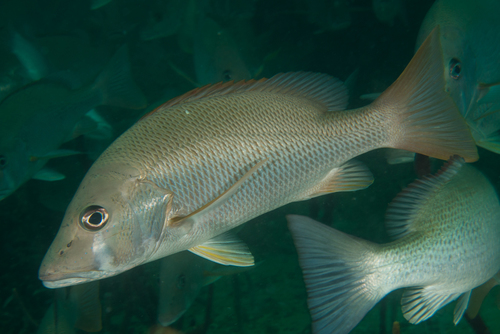
Dog Snapper
Lutjanus jocu
Meet the reef's most formidable 'canine' predator. With its massive teeth and wary personality, the Dog Snapper is a prized discovery for any underwater camera enthusiast.
Quick Identification
Size
Typically 60 cm (24 inches) but can reach up to 128 cm (50 inches); weights range from 1 to 28 kg (2 to 63 lbs)
Colors
Olive-green to bronze on the back and sides, transitioning to a reddish-pink belly; features a distinctive triangular white bar below the eye and a row of small blue spots on the cheeks.
Key Features
- Large prominent canine teeth visible even when mouth is closed
- White triangular patch located under each eye
- Row of small blue spots or 'dashes' across the cheek
- Stocky, powerful body with a slightly rounded anal fin
When You’ll See Them
Geographic range
Where Does the Dog Snapper Live?
Native to the Western Atlantic Ocean, the Dog Snapper is most abundant in the warm tropical waters of the Caribbean Sea and the Gulf of Mexico. Its range extends north along the Atlantic coast of the United States to Massachusetts—though it is rare north of Florida—and stretches southward all the way to the coast of Brazil. This species is a hallmark of the Mesoamerican Barrier Reef and the island chains of the West Indies.
Basemap © OpenStreetMap contributors
Behavior
The Dog Snapper is a formidable and often solitary predator of the reef. Named for its impressive, dog-like canine teeth, this species is known for its wary and cautious nature, particularly around humans and divers. While juveniles are often found in protective mangroves and seagrass beds, mature adults move to deeper offshore reefs and rocky ledges, where they claim specific territories and remain relatively site-faithful.
As nocturnal hunters, Dog Snappers are most active after sunset. During the day, they prefer to hang out in the shadows of ledges or within large coral formations, often remaining motionless or swimming in slow, deliberate patterns. Despite their solitary tendencies, they occasionally form large spawning aggregations during the full moon in spring and summer months, which is one of the few times they are seen in high densities.
EverydayEarth exclusive
Camera Tips
To capture the elusive Dog Snapper on camera, you'll need a specialized underwater setup. If you live on a canal or have access to a dock, mounting a waterproof camera to a piling is highly effective. Aim the lens toward structural cover like artificial reefs or dock supports, as these fish love to hover in the shadows. Use a wide-angle lens to account for the refractive index of water and ensure the camera is weighted or securely strapped to prevent shifting with the tides and currents.
Baiting is almost a requirement for attracting this wary species to a specific spot. A mesh chum bag filled with frozen oily fish like menhaden or sardines, hung within the camera's field of view, will draw them in from the surrounding reef. Because they are primarily nocturnal, you must use a camera with high-quality infrared (IR) capabilities or a dim, red-filtered underwater light. Dog Snappers are notoriously 'camera-shy' and will often dart away if they detect a sudden flash of bright white light or a human-sized shadow.
For the best results, set your camera to record short video clips (15-30 seconds) rather than still photos. This allows you to witness their unique 'strike' behavior and properly view identification features like the white cheek patch that might be blurred in a still frame. Seasonally, targeting the weeks around the full moon in the spring and summer will yield the most activity, as this is when they are most likely to move through shallower coastal corridors during spawning migrations.
Similar Species
Species that look similar or are commonly confused with Dog Snapper.
Schoolmaster Snapper
Lacks the white triangular bar under the eye and usually has bright yellow fins compared to the Dog Snapper's more bronze or reddish fins.
Gray Snapper
Displays a more uniform gray or bronze color and lacks both the distinct white triangular patch and the blue spots on the cheek.
Frequently Asked Questions
Record Dog Snapper at your habitat
Connect a camera to start building your own species record — AI identifies every visitor automatically.