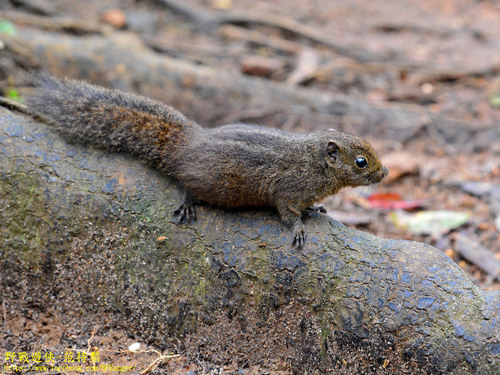
Dusky Palm Squirrel
Funambulus obscurus
The Dusky Palm Squirrel is Sri Lanka's hidden gem of the rainforest floor. A master of the shadows, this tiny endemic mammal thrives in the misty highlands and mossy wet zones of the island.
Quick Identification
Size
Head-body length 11–13 cm (4.3–5.1 in); Tail length 10 cm (3.9 in); Weight 40–60 g (1.4–2.1 oz)
Colors
Dusky olive-brown or dark chocolate-brown coat; three faint, pale buff-colored stripes on the back; creamy-grey underparts
Key Features
- Three inconspicuous longitudinal dorsal stripes
- Smallest palm squirrel in Sri Lanka
- Dense, bushy tail slightly shorter than the body
- Pointed, shrew-like snout
When You’ll See Them
Geographic range
Where Does the Dusky Palm Squirrel Live?
The Dusky Palm Squirrel is an endemic species native to the island of Sri Lanka, located in the Indian Ocean. Its range is strictly confined to the southwestern 'wet zone' and the central mountainous highlands, where annual rainfall is high and humidity is constant. You will not find this species in the dry northern or eastern plains, as it relies on the lush, evergreen vegetation of the island's high-canopy forests.
Basemap © OpenStreetMap contributors
Behavior
The Dusky Palm Squirrel, known locally as the 'batu lena,' is a shy and secretive resident of Sri Lanka's dense rainforests. Unlike the more common Indian Palm Squirrel that frequents urban gardens and rooftops, this species is a forest specialist. It prefers the safety of thick undergrowth and the lower canopy, where its dark, muted coloration provides excellent camouflage against the damp leaf litter and mossy bark.
Primarily diurnal, it is most active in the early morning and late afternoon. While it is an agile climber, it spends a significant amount of time foraging on the ground, making it more terrestrial than many of its relatives. It is generally solitary or found in pairs, and it communicates through high-pitched, bird-like chirps that can be easily mistaken for forest songbirds by the untrained ear.
EverydayEarth exclusive
Camera Tips
To capture the Dusky Palm Squirrel on an AI-powered trail camera, you must focus on the lower strata of the forest. Because they are shy and spend much of their time darting through the undergrowth, place your camera very low—ideally between 20 and 40 centimeters off the ground. Mounting the camera on a tree trunk facing a natural opening in the leaf litter or a fallen, moss-covered log will provide the best results, as these are their preferred travel corridors.
Using a lure can be very effective for this species. A small pile of chopped coconut, bananas, or a mix of native seeds can entice them to stay in the frame long enough for a clear shot. Since they inhabit shaded rainforest environments, ensure your camera's PIR (motion) sensitivity is set to high. Lighting can be tricky in the dark forest understory, so positioning the camera to catch dappled morning light will help highlight the faint stripes on their back that distinguish them from other squirrels.
Seasonality is less of a factor in the tropical wet zone, but activity often spikes during the fruiting seasons of native forest trees. If you are setting a camera in a backyard near a forest edge, look for areas with dense cover like fern thickets or bamboo groves. Avoid placing the camera in wide-open lawns, as the Dusky Palm Squirrel is unlikely to venture far from protective canopy cover. Fast trigger speeds are essential, as these tiny mammals move with incredible speed when they feel exposed.
Frequently Asked Questions
Record Dusky Palm Squirrel at your habitat
Connect a camera to start building your own species record — AI identifies every visitor automatically.