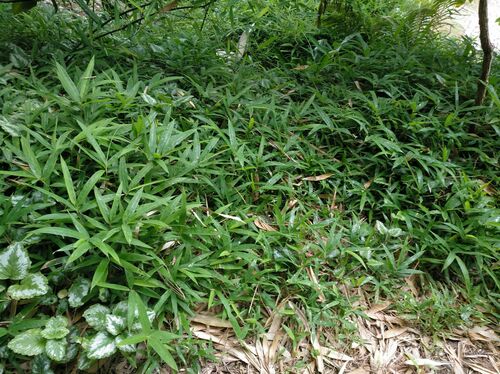
dwarf fernleaf bamboo
Pleioblastus distichus
A miniature marvel of the bamboo world, the Dwarf Fernleaf Bamboo provides lush, fern-like textures for any landscape. This hardy groundcover is a favorite for creating dense, evergreen carpets in temperate gardens.
Quick Identification
Size
Height: 30–60 cm (12–24 inches); Leaves: 2–5 cm (0.8–2 inches) long
Colors
Bright to deep green foliage; slender green culms; leaves may develop slight yellowing in extreme cold or intense direct sun
Key Features
- Distinctive two-ranked (distichous) leaf arrangement resembling fern fronds
- Low-growing groundcover with a dense, spreading habit
- Extremely slender, hollow green stems (culms)
- Small, stiff leaves that grow in flat planes
When You’ll See Them
Geographic range
Where Does the dwarf fernleaf bamboo Live?
Native to the Japanese archipelago, Dwarf Fernleaf Bamboo is a hardy species that has traveled far beyond its East Asian roots. It is now a staple in temperate gardens across North America and Europe, particularly in the Pacific Northwest and the British Isles, where consistent moisture supports its spreading habit. In the United States, it is frequently found naturalized in USDA zones 7 through 10, often forming dense carpets in suburban yards and botanical collections.
Basemap © OpenStreetMap contributors
Behavior
Dwarf fernleaf bamboo is a vigorous, running bamboo that functions primarily as a dense groundcover. Unlike larger timber bamboos, this species focuses its energy on horizontal expansion via underground rhizomes. In the garden or the wild, it forms thick, impenetrable mats of foliage that are excellent for erosion control but can be aggressive if not contained by root barriers.
As a plant, its "behavior" is dictated by environmental response. It is highly resilient to heavy pruning and is often mowed once a year in early spring to encourage fresh, tidy growth. It exhibits a strong preference for consistent moisture and partial shade, though it can adapt to various light levels. In its native Japanese habitat, it plays a role in stabilizing forest floors and providing low-level cover for small organisms.
EverydayEarth exclusive
Camera Tips
When capturing Dwarf Fernleaf Bamboo on camera, focus on its unique texture and the wildlife it attracts. Because this is a low-growing species, place your camera on a ground-level mount or a short tripod. An angle of 10-15 degrees looking slightly upward can emphasize the "forest-like" quality of the tiny culms, making the plant look like a miniature bamboo grove.
This species is a magnet for small backyard inhabitants. Set your camera to a high-sensitivity motion trigger to catch ground-foraging birds like towhees or sparrows, and small mammals like voles or chipmunks that use the dense foliage for cover. If your camera has a macro or close-focus mode, use it to capture the unique "fern-like" arrangement of the leaves, which is the species' most photogenic feature.
For a unique perspective, try a long-term time-lapse during the spring (March to May). Position the camera to face a patch where new shoots are emerging. By taking one photo every 2-4 hours, you can create a stunning video of the bamboo "running" and the culms rapidly expanding. Avoid placing the camera in direct midday sun, as the glossy leaves can cause significant glare; early morning or late afternoon light provides the best contrast and color depth.
Frequently Asked Questions
Record dwarf fernleaf bamboo at your habitat
Connect a camera to start building your own species record — AI identifies every visitor automatically.