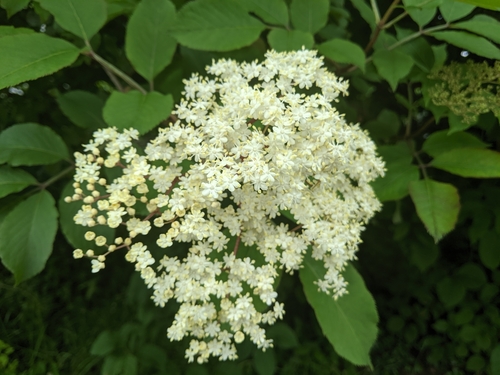
European black elderberry
Sambucus nigra
A cornerstone of the backyard ecosystem, the European black elderberry provides a year-round theater of wildlife activity, from spring pollinators to autumn songbirds.
Quick Identification
Size
Height of 3–6 metres (10–20 ft); flower clusters 10–25 cm (4–10 in) in diameter
Colors
Creamy-white flowers, deep green foliage, and glossy dark-purple to black berries
Key Features
- Flat-topped clusters of tiny cream-colored flowers
- Opposite leaves with 5-7 serrated leaflets
- Small, pendulous bunches of shiny black-purple berries
- Grey-brown bark with a corky, fissured texture
- Hollow stems filled with soft white pith
When You’ll See Them
Geographic range
Where Does the European black elderberry Live?
Native to most of Europe, the European black elderberry's range extends into North Africa and Western Asia. It is exceptionally hardy and has successfully naturalized across much of North America, New Zealand, and parts of Australia. In its core range, it is a ubiquitous sight in both rural countryside and urban green spaces, favoring sunny locations with nitrogen-rich soil.
Basemap © OpenStreetMap contributors
Behavior
The European black elderberry acts as a vital hub for backyard biodiversity, functioning as both a massive nectar source in the spring and a high-energy fruit depot in the autumn. It is a fast-growing deciduous shrub that can quickly form a dense thicket, providing essential nesting cover for songbirds and shelter for small mammals. Its growth cycle is highly seasonal, transitioning from lush green foliage to a sea of white blossoms, and finally to heavy, drooping dark fruit.
For the backyard observer, this plant is a 'magnet' species. While the plant itself is stationary, its presence dictates the activity of dozens of other species. It interacts with humans primarily through its role in traditional foraging; the flowers are used for cordials and the berries for syrups. However, it requires space to spread, often thriving near compost heaps or garden edges where nutrients are high.
EverydayEarth exclusive
Camera Tips
Capturing the life cycle of the European black elderberry requires different setups for each season. During the blooming phase in late spring, mount your camera on a tripod at flower height (usually 4-6 feet) to document pollinators. Use a high-sensitivity motion trigger or a time-lapse setting (one photo every 5-10 minutes) to see which butterflies, bees, and hoverflies visit the fragrant umbels. Because the white flowers can be highly reflective, slightly underexpose your camera settings during mid-day to avoid 'blowing out' the highlights.
When the berries ripen in late summer, position your camera 5-8 feet away from the fruit clusters. This is the best time to capture avian visitors like starlings, blackcaps, and thrushes. Use 'Video Mode' or 'Burst Mode' to capture the fast-paced feeding behavior of birds. Aim the camera slightly downward from a higher vantage point to get a clear view of the birds landing on the flexible, outer branches where the fruit is most abundant. Early morning light is best for capturing the vibrant purple hues of the berries and the active feeding frenzy of songbirds.
To see nocturnal visitors, place a trail camera near the base of the trunk. Small mammals like wood mice or hedgehogs often visit at night to forage for fallen berries. Use a camera with 'No-Glow' infrared LEDs to avoid startling the animals. If you have a weather-resistant camera, a long-term time-lapse (one photo per day) from the same spot starting in April can create a stunning visual record of the shrub's transition from bare winter wood to a lush, fruit-laden bush by August.
Frequently Asked Questions
Record European black elderberry at your habitat
Connect a camera to start building your own species record — AI identifies every visitor automatically.