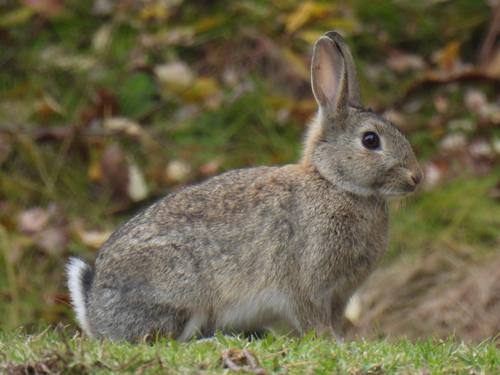
European Rabbit
Oryctolagus cuniculus
The ultimate ecosystem engineer of the backyard, the European Rabbit is as famous for its complex social warrens as it is for its iconic hopping gait.
Quick Identification
Size
34–50 cm (13–20 in) in length; 1.2–2.5 kg (2.6–5.5 lb)
Colors
Grey-brown agouti fur with black and tan flecks; pale cream underside; distinctive rusty-orange patch at the nape of the neck
Key Features
- Ears shorter than the head, lacks black tips
- Social burrower living in warrens
- White underside of the tail (scut) visible when running
- Nape of the neck has a distinct reddish-brown patch
When You’ll See Them
Geographic range
Where Does the European Rabbit Live?
The European Rabbit is native to the Iberian Peninsula and southwestern France, but human introduction has spread them across the globe. Today, they are found throughout the United Kingdom, Ireland, and mainland Europe, while significant introduced populations thrive in Australia, New Zealand, South Africa, and parts of South America. Their ability to adapt to varied climates has made them one of the most widespread mammals in temperate regions.
Basemap © OpenStreetMap contributors
Behavior
European Rabbits are highly social mammals famous for their complex underground dwelling systems known as warrens. Within these colonies, they maintain a strict social hierarchy. Dominant individuals secure the safest nesting spots near the center of the burrow, while subordinate rabbits are pushed to the more vulnerable edges. They spend much of their day underground to avoid predators, emerging primarily during the low-light hours to forage.
When above ground, they are exceptionally vigilant. They often perform a 'scanned' posture, standing on their hind legs to look for threats. Communication is a mix of scent marking and physical signals; if a rabbit senses danger, it will vigorously thump its hind legs against the ground, sending a vibration through the earth to warn others in the colony. Their movement is characterized by short, hopping bursts followed by periods of frozen stillness.
EverydayEarth exclusive
Camera Tips
To capture the most natural behavior of European Rabbits, place your camera very low—ideally just 15 to 30 centimeters (6 to 12 inches) off the ground. Aim the lens toward the edge of a hedge, a fence line, or a known 'run,' which is the flattened grass path they use to travel between their burrows and feeding grounds. Rabbits rarely cross open lawns directly, preferring to hug the perimeter where cover is close at hand.
Because they are crepuscular, your camera’s infrared performance is vital. Look for a model with a fast trigger speed (under 0.5 seconds) because a rabbit can zip through the frame in a heartbeat. Setting the camera to video mode for 15-20 seconds is often more rewarding than photos, as it allows you to capture social grooming, 'binkies' (joyful leaps and twists), and the characteristic nose-twitching while they sniff the air.
In a backyard setting, you don't necessarily need bait, but a small pile of fresh hay, apple slices, or carrots can encourage them to linger in front of the lens. If you are tracking a specific warren, place the camera at least three meters away from the entrance to ensure you have a wide enough field of view to see them emerging and interacting, rather than just getting a face full of fur as they hop out.
Similar Species
Species that look similar or are commonly confused with European Rabbit.
Frequently Asked Questions
Record European Rabbit at your habitat
Connect a camera to start building your own species record — AI identifies every visitor automatically.