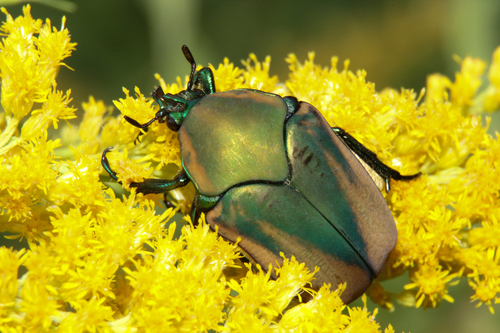
Figeater Beetle
Cotinis mutabilis
The figeater beetle is a shimmering emerald gem of the Southwest. Often heard before it is seen, this bumbling, metallic scarab is a harmless and fascinating summer visitor to backyard fruit trees.
Quick Identification
Size
20–34 mm (0.8–1.3 inches) in length
Colors
Dull metallic green or forest green on the back (elytra) with a velvety texture; brilliant, shiny iridescent green on the underside and legs
Key Features
- Vibrant emerald green body with a velvety matte finish
- Loud, buzzing flight sound similar to a carpenter bee
- Hooked, spindly legs for gripping fruit
- Broad, shield-like body shape typical of scarabs
When You’ll See Them
Behavior
These beetles are highly social when it comes to dining. They are often found in large clusters on a single piece of overripe fruit, pushing and shoving one another to reach the sweetest juices. Unlike most beetles that chew through leaves, the figeater has specialized mouthparts designed to lap up liquid and soft pulp, making them more of a nuisance to fruit growers than to the average gardener's ornamental plants.
During the larval stage, they are known as 'crawly backs' because they have the unique habit of flipping onto their backs and using stiff dorsal hairs to wiggle through soil or compost. As adults, they are sun-worshippers, spending the majority of their short lives searching for fermenting sugars and mates during the hottest hours of the summer.
EverydayEarth exclusive
Camera Tips
Position your AI-powered camera approximately 2 to 4 feet away from the bait. Because figeater beetles are relatively small, you want a tight field of view. Aim for an angle that captures the side or top of the beetle to highlight the contrast between their matte green backs and their shiny, metallic undersides. If your camera allows for manual focus or macro settings, use them to ensure the iridescent details of their shells are crisp.
Lighting is your best friend when filming figeaters. These beetles are most active during the brightest parts of the day. To avoid harsh shadows or lens flare, try to position the camera with the sun at its back, illuminating the beetle directly. This will make the emerald green color 'pop' against the background. Late morning light (around 10 AM) often provides the perfect balance of warmth and brightness to capture their metallic luster.
Set your camera to record short video clips (15-20 seconds) with a high frame rate if possible. Figeater beetles are constantly in motion even when feeding, fluttering their wings and jostling with competitors. Video captures this frantic energy far better than a still photo. If you are using a motion-activated trigger, set it to the highest sensitivity, as their quick flight movements can sometimes bypass slower sensors.
Finally, consider the background. A dark wooden surface or a slate tile provides an excellent neutral backdrop that won't distract from the beetle's vibrant green. Avoid placing bait near swaying branches or tall grass, as the movement can cause false triggers on your camera, filling your SD card with 'ghost' videos before the beetles even arrive.
Similar Species
Species that look similar or are commonly confused with Figeater Beetle.
Frequently Asked Questions
Record Figeater Beetle at your habitat
Connect a camera to start building your own species record — AI identifies every visitor automatically.