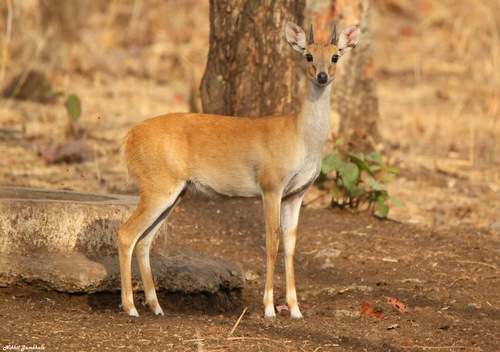
Four-horned Antelope
Tetracerus quadricornis
The Four-horned Antelope is a true evolutionary oddity, being the only mammal in the world with four horns. Secretive and masterfully camouflaged, this 'Chousingha' is a rare prize for any nature observer in the Indian wilderness.
Quick Identification
Size
Shoulder height 55–64 cm (22–25 in); Weight 17–22 kg (37–49 lb)
Colors
Yellowish-tan to reddish-brown coat; white underparts and inner legs; males feature dark horns and a distinct dark stripe down the front of each leg.
Key Features
- Four distinct horns on males (two between ears, two on forehead)
- Small, slender build with thin legs
- Short, dark-tipped tail
- White patches on the muzzle and backs of ears
When You’ll See Them
Geographic range
Where Does the Four-horned Antelope Live?
The Four-horned Antelope is native to the Indian subcontinent, with its primary strongholds located in the tropical deciduous forests of central, western, and southern India. A smaller, more fragmented population exists in the lowlands and foothills of Nepal, specifically within the Terai region. While they are widely distributed across several Indian states, they are habitat specialists that require hilly terrain and significant undergrowth for protection.
Basemap © OpenStreetMap contributors
Behavior
The Four-horned Antelope, also known as the Chousingha, is a notoriously shy and solitary creature. Unlike many other antelope species that roam in large herds, these small bovids are typically found alone or in pairs. They are extremely wary of predators and humans alike, often freezing in place or darting into thick cover at the slightest sign of danger. Their movement is characterized by a distinctive, jerky gait that helps them navigate the uneven, hilly terrain they call home.
Feeding primarily during the early morning and late afternoon, they are most active during the cooler parts of the day. They have a strong dependency on water and are rarely found more than a few kilometers from a permanent water source. In areas where they overlap with human settlements, they tend to remain deep within forest boundaries, though they may occasionally venture to the edges of agricultural fields that border protected forests if cover is available.
EverydayEarth exclusive
Camera Tips
Capturing the Four-horned Antelope on camera requires a strategy focused on stealth and location. Because these animals are small—standing only about two feet at the shoulder—your camera should be mounted quite low to the ground. Aim for a height of 30 to 45 cm (12-18 inches) and tilt the camera slightly upward to capture the full profile and the unique horn structure of the males. A high-speed trigger is essential, as they are quick and easily startled.
Placement is everything for this species. Look for established game trails leading to water sources or salt licks, which are major draws for the Chousingha. They have a habit of using the same latrine sites repeatedly; if you find a patch of concentrated droppings in a forest clearing, that is a prime location for your camera. Avoid placing cameras in wide-open areas where they feel exposed; instead, target the edges of dense scrub where they feel safe enough to linger.
During the summer months, when water is scarce, positioning your camera near a forest 'saucer' or a small pool will yield the best results. Since they are primarily diurnal and crepuscular, ensure your camera has a good dynamic range to handle the dappled sunlight of the forest floor. Avoid using white-flash cameras as the sudden light will likely scare them off the trail for days; a high-quality no-glow infrared flash is the best choice for recording their natural behavior without disturbance.
Frequently Asked Questions
Record Four-horned Antelope at your habitat
Connect a camera to start building your own species record — AI identifies every visitor automatically.