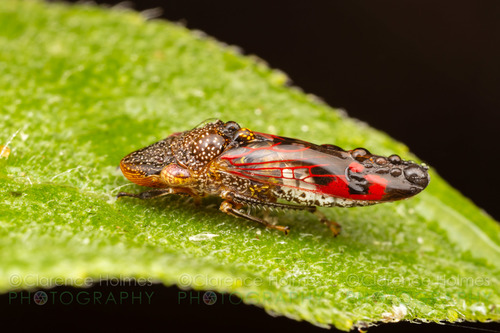
Glassy-winged Sharpshooter
Homalodisca vitripennis
A large and distinctive leafhopper, the Glassy-winged Sharpshooter is famous for its transparent wings and its specialized diet of plant sap. While it is a fascinating example of insect engineering, it is also a watchful garden resident that uses clever hide-and-seek tactics to evade discovery.
Quick Identification
Size
12–14 mm (0.47–0.55 inches) in length
Colors
Dark brown to black body with small ivory or yellowish spots on the head and thorax; wings are transparent with reddish-brown veins
Key Features
- Large size for a leafhopper, nearly half an inch long
- Transparent (glassy) wings with distinct veining
- Head and thorax covered in light-colored speckles
- Large, prominent eyes set on the sides of the head
When You’ll See Them
Geographic range
Where Does the Glassy-winged Sharpshooter Live?
The Glassy-winged Sharpshooter is native to the southeastern United States and northeastern Mexico, where it thrives in warm, humid environments from Florida to Texas. In recent decades, it has significantly expanded its footprint, becoming an established and often invasive presence in California, Hawaii, and parts of the South Pacific, including French Polynesia and the Cook Islands. It is frequently found in agricultural valleys and suburban residential areas where irrigation provides a consistent supply of lush host plants.
Basemap © OpenStreetMap contributors
Behavior
The Glassy-winged Sharpshooter is a highly active and mobile insect, known primarily for its role as a "sharpshooter"—a name derived from its habit of forcibly ejecting droplets of excess fluid, known as honeydew, from its rear with an audible flick. These insects are xylem-feeders, meaning they tap into the plant's water-conducting tissue. Because xylem fluid is nutrient-poor, the sharpshooter must consume vast quantities of it, sometimes processing hundreds of times its body weight in liquid every day.
In a backyard setting, they are often seen on the stems of plants rather than the leaves. They are wary and have a clever defense mechanism: when they sense a predator (or a curious human) approaching, they quickly scoot to the opposite side of the stem to remain out of sight. While they do not bite or sting humans, they are considered a significant agricultural pest because they can spread the bacterium Xylella fastidiosa, which causes various plant diseases.
EverydayEarth exclusive
Camera Tips
Capturing the Glassy-winged Sharpshooter on camera requires a focus on micro-habitats. Because of their small size, a standard trail camera may struggle unless it has a macro lens or a very short minimum focal distance. Position your camera near known host plants such as citrus trees, grapevines, or crepe myrtles. Look for the "white wash" on leaves—dried excrement that looks like white powder—which indicates heavy sharpshooter activity nearby.
Since these insects are sensitive to movement, mount your camera securely and use a high-sensitivity motion trigger if the software allows. They are most active during the warmest parts of the day when sap flow in plants is high. Setting your camera to record short video clips rather than still photos is often more rewarding, as you might capture their unique "flicking" behavior or their rapid side-stepping movement around a branch.
Lighting is crucial for showing off their namesake feature. Try to angle your camera so that the sun is behind or to the side of the insect; this backlighting will make their transparent, glassy wings glow against the darker background of the plant stem. In the peak of summer, you may even capture the "rain" effect of their liquid waste if you record at a high frame rate against a dark, shaded background.
Similar Species
Species that look similar or are commonly confused with Glassy-winged Sharpshooter.
Frequently Asked Questions
Record Glassy-winged Sharpshooter at your habitat
Connect a camera to start building your own species record — AI identifies every visitor automatically.