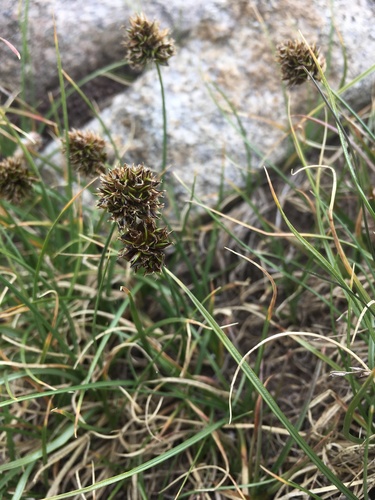
globe sedge
Carex perglobosa
A resilient gem of the high peaks, the globe sedge defies the elements with its sturdy, orb-like flower heads. This alpine specialist brings life and texture to the harshest rocky slopes of the Rocky Mountains.
Quick Identification
Size
Stands 5-15 cm (2-6 inches) tall with a spread of 5-10 cm (2-4 inches) in dense tufts.
Colors
Bright green foliage; flower heads are initially light green, maturing to a dark brownish-purple or near-black.
Key Features
- Distinctive globe-shaped (subglobose) flower clusters
- Densely tufted, grass-like growth habit
- Narrow, channelled leaves that are often shorter than the flower stalks
- Found exclusively in high-elevation alpine rocky zones
When You’ll See Them
Behavior
The globe sedge is a hardy perennial plant specifically adapted to the extreme conditions of high-altitude alpine tundra. Unlike its woodland relatives, this species grows in tight, low-profile tufts to minimize exposure to freezing winds and to trap heat near the ground. It is one of the few vascular plants capable of thriving in the thin, rocky soils of scree slopes and mountain ridges.
As a member of the Cyperaceae family, it does not produce traditional flowers with petals. Instead, it relies on wind pollination, sending up sturdy stalks topped with dense, orb-like seed heads. These globes are actually clusters of multiple spikes packed tightly together. Throughout its short summer growing season, the plant works quickly to flower and set seed before the heavy mountain snows return in early autumn.
EverydayEarth exclusive
Camera Tips
Photographing globe sedge presents unique challenges due to its small stature and the high-wind environments it calls home. To capture the best images, use a camera with a dedicated macro mode or a lens with a short focal length. Position your camera as low as possible—nearly level with the ground—to give the plant a sense of scale and to capture the sky or mountain peaks in the background. A small ground-stake or a 'bean bag' mount is often more effective than a full-sized tripod in the rocky terrain where these sedges grow.
Because the alpine tundra is notoriously windy, motion blur is your biggest enemy. Set your AI camera to a high shutter speed (at least 1/500s) to freeze the movement of the seed heads. If you are using a trail camera for time-lapse, configure it to take shots during the 'Golden Hours' of 6-8 AM or 5-7 PM. The low-angle sunlight during these times will highlight the intricate textures of the globe-shaped heads and the fine, paper-like scales (perigynia) that protect the seeds.
Since globe sedge is a static subject, it is a perfect candidate for a growth-tracking project. If you have a permanent backyard or trail setup in a high-altitude area, use a time-lapse setting to take one photo every day at noon from July through August. This will create a stunning visual record of the seed heads changing from green to deep purple-black. Ensure your camera housing is UV-resistant, as the solar radiation at high altitudes can be intense enough to degrade standard plastics over a single season.
Frequently Asked Questions
Record globe sedge at your habitat
Connect a camera to start building your own species record — AI identifies every visitor automatically.