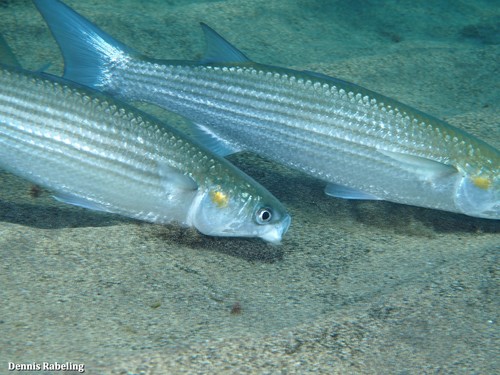
Golden Grey Mullet
Chelon auratus
A shimmering silver nomad of the Mediterranean and Atlantic coasts, the Golden Grey Mullet is easily identified by the sun-kissed spot on its cheek. Known for its incredible leaps and social schools, this hardy fish bridges the gap between the open sea and our coastal estuaries.
Quick Identification
Size
Typically 30-40 cm (12-16 in), reaching a maximum of 59 cm (23 in); weighs between 0.5-2.5 kg (1.1-5.5 lbs).
Colors
Silvery-grey back fading to a white belly, with a distinctive bright golden-yellow spot on the gill cover (operculum).
Key Features
- Distinctive golden spot on the operculum (gill cover)
- Two widely separated dorsal fins, the first with 4 spines
- Slender, streamlined silvery body with faint longitudinal stripes
- Small, terminal mouth with a thin upper lip
When You’ll See Them
Geographic range
Where Does the Golden Grey Mullet Live?
The Golden Grey Mullet is native to the Eastern Atlantic Ocean and the Mediterranean Basin. It is commonly found from the coastal waters of the United Kingdom and Norway in the north, stretching down the European coastline to Morocco and Senegal in West Africa. This species is particularly abundant throughout the Mediterranean and Black Seas, where it frequently enters coastal lagoons and the lower reaches of rivers during the warmer months.
Basemap © OpenStreetMap contributors
Behavior
The Golden Grey Mullet is a highly social and energetic fish, typically seen moving in large, coordinated schools. They are famous for their agility and are frequently observed leaping entirely out of the water, a behavior thought to help them escape predators or perhaps clear their gills in oxygen-poor environments. Unlike many other marine fish, they are euryhaline, meaning they can easily transition between salt water and the brackish waters of estuaries and lagoons.
These fish are generally shy and easily spooked by sudden movements on the shore or shadows on the water's surface. They exhibit a unique feeding behavior where they 'graze' on the substrate, vacuuming up mouthfuls of sediment to filter out organic matter. While they are not aggressive toward humans, they are a favorite challenge for recreational anglers due to their wary nature and soft mouths, which require a delicate touch to catch.
EverydayEarth exclusive
Camera Tips
Capturing the Golden Grey Mullet requires an underwater camera setup, such as a GoPro or a specialized submerged trail cam, as they are rarely visible from above the surface in high detail. For the best results, mount your camera on a weighted tripod or a dock piling at a depth of 1 to 2 meters. Position the lens horizontally or slightly upward to capture the silvery reflection of their scales against the sunlight filtering through the water.
To attract a school into the camera's field of view, use 'groundbaiting' techniques. A mesh bag filled with a mixture of crushed bread, fish oil, or algae-based paste tied near the camera lens is highly effective. Mullet have a keen sense of smell and will congregate around the bait, providing excellent footage of their social feeding dynamics. Ensure the bait bag is secured so it doesn't drift and obscure the lens.
Visibility is key when filming underwater wildlife. Choose a day with calm winds and high sun—usually between 10 AM and 2 PM—to ensure maximum light penetration. In coastal lagoons, wait for a rising tide when clearer seawater pushes into the estuary, as the outgoing tide often carries silt that can make the footage murky. Set your camera to a high frame rate (60fps or higher) to capture their fast, darting movements and iconic jumping behavior with clarity.
Frequently Asked Questions
Record Golden Grey Mullet at your habitat
Connect a camera to start building your own species record — AI identifies every visitor automatically.