Goldfish
Carassius auratus
The world's most recognizable fish is a marvel of resilience and beauty. Whether shimmering in a garden pond or navigating wild waterways, the goldfish remains an icon of the aquatic world.
Quick Identification
Size
15-45 cm (6-18 inches) in length; typically weights 0.5-2.5 kg (1-5.5 lbs) depending on environment
Colors
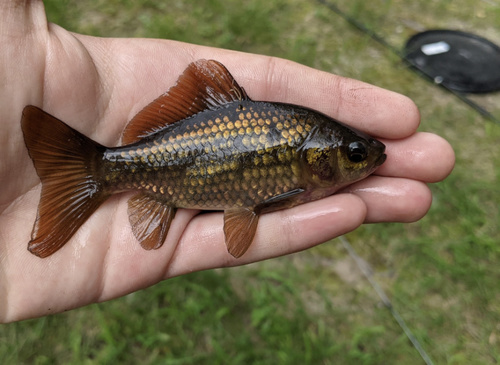
Wild types are olive-bronze or grayish-brown; domesticated varieties range from bright orange and red to white, yellow, or calico
Key Features
- Long dorsal fin base with a single stout serrated spine
- Absence of sensory barbels around the mouth
- Deep, thick body with large scales
- Tough, leathery mouth that lacks teeth (uses pharyngeal teeth in throat)
When You’ll See Them
Geographic range
Where Does the Goldfish Live?
The goldfish is native to the temperate waters of East Asia, with its ancestral roots tracing back to the river systems of China. Following centuries of domestication and global trade, they have established self-sustaining populations on every continent except Antarctica. In North America and Europe, they are widely distributed across temperate regions, often thriving in urban and suburban water bodies where they have been introduced by humans.
Basemap © OpenStreetMap contributors
Behavior
Goldfish are highly social and intelligent creatures that often school together for protection and foraging. In a backyard or wild environment, they are opportunistic survivors, spending the majority of their daylight hours scouring the bottom of ponds or slow-moving streams for food. Unlike many other fish, they do not have a stomach; instead, they have a long intestinal tract designed for continuous grazing throughout the day.
In interactions with humans, goldfish are known for their ability to recognize individual faces and can be conditioned to associate people with feeding times. In the wild, however, they are much more cautious, often darting into submerged vegetation or deep mud at the first sign of a shadow or vibration. During the spring, they exhibit high-energy spawning behaviors where males chase females through aquatic plants to stimulate egg release.
EverydayEarth exclusive
Camera Tips
Capturing high-quality footage of goldfish requires a different approach than land-based wildlife. If you are using an AI-powered backyard camera, position it on a dock or a stable overhanging branch looking straight down into the water. To minimize surface glare and 'see through' the water, use a circular polarizing filter over the lens. This is especially effective during midday when the sun is directly overhead, allowing the camera to capture the vibrant oranges and bronzes of the fish against the darker pond bottom.
For those using waterproof action cameras or specialized underwater trail cams, placement is everything. Submerge the camera roughly 12 inches below the surface, aimed toward a 'staging area' like the edge of a lily pad forest or a submerged rock pile. These are natural congregating spots. Ensure the camera is weighted or tethered securely, as large goldfish are curious and may bump into the equipment, knocking it out of alignment.
Baiting is the most effective way to trigger your camera's motion sensors. Sinking pellets are better than floating ones for photography, as they keep the fish in a specific frame and encourage natural foraging behavior on the substrate. If you are trying to capture the species in a wild or larger pond setting, look for areas with minimal current. Goldfish prefer 'dead water' where they don't have to fight a flow, making these spots the most reliable for consistent activity.
Regarding camera settings, goldfish can move surprisingly fast when startled. Use a high frame rate (at least 60fps) if your camera allows it, as this will help you capture clear stills from the video without motion blur. Because water absorbs light quickly, set your camera to a higher sensitivity (ISO) if you are filming in deep or murky water, but try to keep your shots within the top two feet of the water column for the best color rendition.
Similar Species
Species that look similar or are commonly confused with Goldfish.
Frequently Asked Questions
Record Goldfish at your habitat
Connect a camera to start building your own species record — AI identifies every visitor automatically.