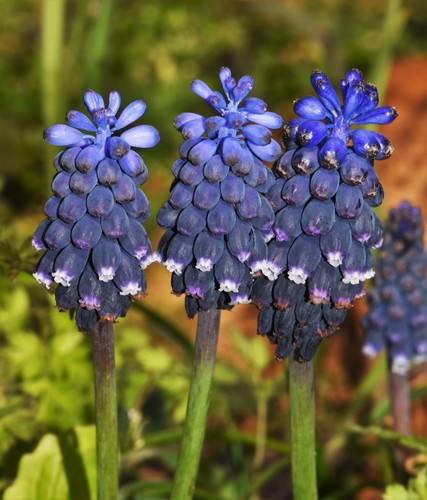
Grape hyacinth
Muscari neglectum
A spring garden staple, the Grape Hyacinth paints the ground in shades of deep indigo just as the winter frost recedes. These resilient little bulbs are a favorite for pollinators and provide a stunning visual carpet for any backyard enthusiast.
Quick Identification
Size
6-12 inches (15-30 cm) tall; flower spikes typically 1-3 inches (2.5-7.5 cm) long
Colors
Deep cobalt blue to violet-black flower bells, often with a thin white 'rim' or teeth at the opening; bright green strap-like leaves
Key Features
- Spikes of dense, urn-shaped flowers resembling a bunch of grapes
- Fleshy, narrow, grass-like leaves that often flop over
- Top-most flowers are often sterile and lighter in color
- Distinctive musky or starch-like fragrance when in bloom
When You’ll See Them
Behavior
Grape hyacinth is a hardy, early-season perennial that emerges from small underground bulbs. It is one of the first signs of life in a spring garden, often pushing through the soil while the air is still crisp. Unlike many other garden plants, it is known for its ability to 'naturalize,' meaning it spreads readily across lawns and garden beds to create a stunning carpet of blue over time.
During the blooming phase, which lasts for several weeks in mid-to-late spring, the plant is a magnet for early-season pollinators. Once the flowers fade, the plant focuses on storing energy in its bulb for the following year. By mid-summer, the foliage usually dies back completely and the plant enters a period of dormancy, disappearing from view until the following spring or, in some climates, sent out a few leaves in the autumn.
EverydayEarth exclusive
Camera Tips
To capture the true beauty of Grape Hyacinth, you must get your camera down to ground level. These are short plants, so a standard tripod won't do; use a 'ground spike' mount or a flexible tripod like a GorillaPod to position the lens just 4-6 inches off the grass. Aim for a side-on profile or a slightly upward angle to capture the 'bell' shape of the individual flowers against the sky or a blurred green background.
Time-lapse is the best way to document this species. Set your AI camera to take a photo every 30 minutes starting in early March. When stitched together, you’ll see the fascinating way the flower spike elongates and the 'grapes' change from tight green buds to deep indigo bells. This is especially effective if you have a patch that is just beginning to emerge from the soil.
Because the flowers are a deep, saturated blue, they can sometimes look 'muddy' or over-exposed in direct midday sun. The best time for photography is during the 'Golden Hour'—shortly after sunrise or before sunset—when the soft light makes the blue hues pop. Early morning is also ideal for capturing dew drops on the flower bells, which provides a professional-grade macro aesthetic to your backyard feed.
Don't just watch the plant; watch what visits it. Grape Hyacinth is a primary food source for early-emerging queen bees and hoverflies. If using a motion-activated camera, set the trigger sensitivity to high and use a fast shutter speed (1/500 or higher) to freeze the action of these pollinators. Position the camera about 12-18 inches away from a healthy cluster of blooms to ensure the AI can distinguish the insects from the foliage.
Frequently Asked Questions
Record Grape hyacinth at your habitat
Connect a camera to start building your own species record — AI identifies every visitor automatically.