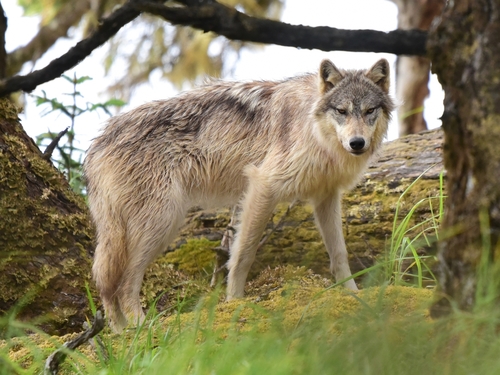
Gray Wolf
Canis lupus
The Gray Wolf is the legendary apex predator of the northern wilderness, a symbol of untamed nature and complex social intelligence. From their haunting howls to their incredible endurance, these majestic canines continue to fascinate wildlife enthusiasts across the globe.
Quick Identification
Size
Length 105-160 cm (41-63 in); Weight 30-80 kg (66-176 lbs)
Colors
Mottled grey, brown, black, and white; Arctic subspecies often nearly pure white; no significant color difference between males and females
Key Features
- Large paws with tracks up to 5 inches long
- Thick, bushy tail often held straight or slightly down
- Broad snout and rounded ears compared to coyotes
- Heavily muscled neck and chest with a deep ribcage
When You’ll See Them
Geographic range
Where Does the Gray Wolf Live?
Native across the Northern Hemisphere, Gray Wolves occupy vast territories stretching from the remote Arctic reaches of North America and Eurasia down to the mountainous regions of the United States and Southern Europe. While their range has been reduced by human expansion, they remain a dominant predator across much of Canada, Alaska, Russia, and Central Asia, with recovering populations in parts of the American West and Great Lakes region.
Basemap © OpenStreetMap contributors
Behavior
Gray Wolves are highly social apex predators that live in complex family units known as packs. These packs usually consist of a breeding pair and their offspring from previous years, operating under a sophisticated social hierarchy. Communication is vital to pack survival, utilizing a combination of scent marking, intricate body language, and their iconic long-distance howling to defend territories and coordinate hunts.
While they are formidable hunters, wolves are naturally elusive and generally avoid human contact. They are wide-ranging animals, often patrolling territories that span hundreds of square miles. Their interactions with humans are historically complex, but in a modern backyard or trail camera context, they are usually just passing through as they follow the migrations of their primary prey.
EverydayEarth exclusive
Camera Tips
Placement is key when trying to capture an apex predator. Focus on ridgelines, old logging roads, or game trails that follow natural contours, as wolves prefer paths of least resistance when patrolling their massive territories. Aim the camera about 24-30 inches off the ground to capture their full profile and avoid over-triggering from smaller ground-dwelling animals. Because wolves move with a steady, purposeful gait, use a high-speed trigger setting to prevent capturing just a tail or a blurry hindquarter.
To attract Gray Wolves without using food (which can be dangerous or illegal in many jurisdictions), consider using scent lures. A few drops of a curiosity-inducing scent, like commercial gland lures or even certain essential oils, placed on a prominent rock or stump can encourage a wolf to stop and sniff, giving you the perfect clear shot. However, wolves are notoriously 'camera shy' and have incredible senses; they may detect the infrared glow or human scent on the device. Wearing gloves when handling equipment and using 'no-glow' or black-flash LEDs is essential to avoid spooking them.
Winter is often the best time for wolf photography on trail cameras. Not only does the snow provide a clean, high-contrast background that makes their mottled fur pop, but wolves are more active during the daylight hours to conserve energy. Their thick winter coats are also at their most impressive during the colder months. Set your camera for a 3-photo burst or a 15-second video clip, as wolves often travel in single file; a single photo might capture the leader, but a video will reveal the true size of the pack following behind.
Similar Species
Species that look similar or are commonly confused with Gray Wolf.
Coyote
Much smaller build with more pointed ears and a narrower, fox-like muzzle.
Domestic Dog
Dogs typically have tails that curl upward and shorter, less powerful legs; wolf tracks also show more symmetrical toe placement.
Red Wolf
Smaller and thinner than the Gray Wolf, with a distinctive reddish tint to the fur behind the ears and along the legs.
Frequently Asked Questions
Record Gray Wolf at your habitat
Connect a camera to start building your own species record — AI identifies every visitor automatically.