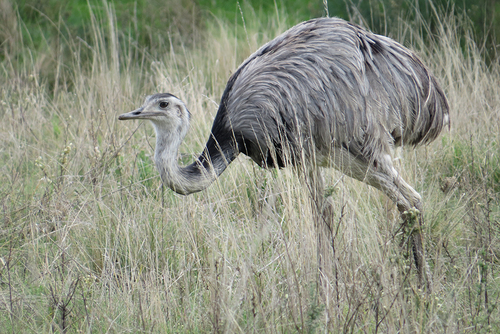
Greater Rhea
Rhea americana
Meet the Greater Rhea, the largest bird in the Americas and a master of the open plains. Famous for its incredible speed and the dedicated fatherhood of the males, this flightless giant is a true marvel of the Southern Hemisphere.
Quick Identification
Size
Height 127–140 cm (50–55 in); Weight 20–27 kg (44–60 lb)
Colors
Greyish-brown upperparts with pale white underparts; males have distinctive black patches on the neck and upper back
Key Features
- Large flightless bird with long, powerful legs
- Three-toed feet without a hind toe
- Long, slender neck and small head
- Shaggy, grey-brown plumage with large wings used for balance
When You’ll See Them
Geographic range
Where Does the Greater Rhea Live?
The Greater Rhea is a native icon of South America, with its core populations stretching across the vast plains of Argentina, Brazil, Uruguay, Paraguay, and Bolivia. These birds thrive in the open pampas and scrublands, avoiding dense forested regions in favor of wide-open vistas where they can spot predators from a distance. Surprisingly, a small but hardy wild population has also taken root in Northern Germany, originating from a few farm escapees in the late 1990s, making them a unique addition to the European countryside.
Basemap © OpenStreetMap contributors
Behavior
The Greater Rhea is a highly social and intelligent bird, often found in mixed-species flocks alongside Pampas deer or livestock for added protection against predators. They are masters of the open plains, utilizing their incredible speed—up to 60 km/h (37 mph)—to outrun threats. When escaping, they engage in a unique zigzagging run, using their large wings like rudders to perform sudden, sharp turns that confuse pursuers.
Their reproductive strategy is one of the most fascinating in the bird world. During the breeding season, the male takes on the role of the primary caregiver. He builds a ground nest and attracts several females, who all lay their eggs in his nest. The male then incubates the eggs alone and raises the chicks with fierce dedication, aggressively defending them from any perceived threat for up to six months. Outside of breeding, they are generally quiet but can produce a deep, booming roar that carries across the grasslands.
EverydayEarth exclusive
Camera Tips
Capturing the Greater Rhea requires a different approach than smaller backyard birds due to their significant height. Set your camera at chest height—roughly 3 to 4 feet (1 meter) off the ground—and angle it slightly upward if you are on level terrain. This ensures you capture the entire bird, including their long necks, rather than just their legs. A wide-angle lens is preferable because these birds are large and often move in groups; a narrow field of view might only catch a flurry of grey feathers as they pass by.
Location is everything with Rheas. Look for "corridors" in grasslands or gaps in fences. Unlike many large animals, Rheas prefer to duck under or squeeze through fence gaps rather than jump over them. Placing a camera near these known transit points is your best bet for a clear, centered shot. In South America, watering holes are also high-traffic areas during the dry season, providing excellent opportunities for stationary shots while they drink.
Since they are diurnal, ensure your camera's trigger speed is set to its fastest setting to catch them in stride. If your camera supports video, use 15-30 second clips to capture their unique "rowing" gait or the male's elaborate courtship displays. During the spring, keep an eye out for "booming" males—their low-frequency calls can actually vibrate the air. If you are in the German range, late summer is the best time to see the "fathers" leading large groups of striped chicks through the tall grass.
Frequently Asked Questions
Record Greater Rhea at your habitat
Connect a camera to start building your own species record — AI identifies every visitor automatically.