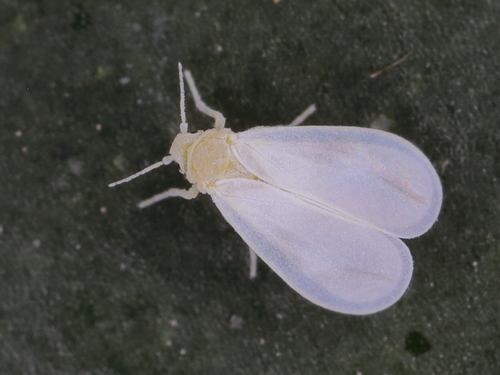
Greenhouse Whitefly
Trialeurodes vaporariorum
Though barely the size of a grain of sand, the Greenhouse Whitefly is a fascinating backyard resident known for its powdery white wings and social behavior. Often found in fluttering clouds around vegetable patches, these tiny insects offer a microscopic window into the complexity of garden ecosystems.
Quick Identification
Size
1–2 mm (0.04–0.08 inches) in length; wingspan is slightly larger than body length
Colors
Body is pale yellowish to light green; wings are coated in a bright white, powdery wax
Key Features
- Tiny moth-like appearance with four white, powdery wings
- Wings held nearly parallel to the leaf surface
- Piercing-sucking mouthparts for sap feeding
- Found in large colonies on the undersides of leaves
When You’ll See Them
Behavior
They are hemimetabolous, meaning they undergo an incomplete metamorphosis. While the adults are mobile, the nymphal stages—often called 'scales'—are stationary and look like small, translucent ovals attached to the leaf. These insects are significant honeydew producers; they excrete a sticky, sugar-rich waste that often coats the leaves below them, attracting ants and encouraging the growth of black sooty mold.
EverydayEarth exclusive
Camera Tips
Lighting is critical for these subjects. Because their wings are coated in a white, reflective wax, they can easily 'blow out' and lose detail in direct, harsh sunlight. Use a diffuser or position your camera on the shaded side of the plant to capture the subtle textures of their wings. If your camera setup allows for an external LED light, a soft side-light will help reveal the yellowish body hidden beneath the wings.
Whiteflies are strongly attracted to the color yellow. To bring more individuals into your camera's field of view, you can place a small yellow card or ribbon near the focal point—just be careful not to use actual sticky traps if you want to record their natural movement. Set your camera's trigger sensitivity to the highest possible setting, as their movement is subtle. If you are using video, record at 60fps or higher to catch the rapid wing beats when they take flight.
Similar Species
Species that look similar or are commonly confused with Greenhouse Whitefly.
Frequently Asked Questions
Record Greenhouse Whitefly at your habitat
Connect a camera to start building your own species record — AI identifies every visitor automatically.