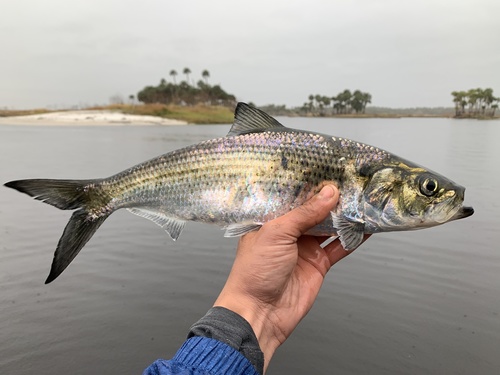
Hickory Shad
Alosa mediocris
The Hickory Shad is a silver-scaled acrobat of the Atlantic coast, celebrated for its spirited leaps and epic spring migrations from sea to stream. Distinguished by its jutting lower jaw and iridescent coat, it is a hallmark species of the Eastern Seaboard's river health.
Quick Identification
Size
Typically 12 to 20 inches (30–50 cm) in length and weighing 1 to 3 lbs (0.5–1.4 kg)
Colors
Iridescent silver sides with a dark greenish-blue or grey back; a cluster of dark spots is usually visible behind the gill cover
Key Features
- Protruding lower jaw that extends past the upper jaw
- Deeply forked tail fin
- Series of 6-8 dark spots along the upper side
- Compressed, blade-like belly (the 'scutes')
When You’ll See Them
Geographic range
Where Does the Hickory Shad Live?
Native to the Eastern Seaboard of North America, the Hickory Shad is found from the Gulf of Maine south to the St. Johns River in Florida. This species is most abundant in the Mid-Atlantic region, particularly within the Chesapeake Bay and its many freshwater tributaries. While they spend their winters in the Atlantic coastal waters, they are famously associated with the 'Shad Run' in rivers like the Potomac, James, and Delaware during the spring months.
Basemap © OpenStreetMap contributors
Behavior
Hickory Shad are highly active, schooling fish known for their 'anadromous' lifestyle, meaning they live most of their lives in the ocean but migrate into freshwater rivers to spawn. Unlike their cousins, the American Shad, Hickory Shad are notably more aggressive and predatory. They are famous among observers and anglers for their 'acrobatic' behavior; when chasing prey or being caught, they frequently leap entirely out of the water.
In the spring, they form large schools to move into coastal tributaries. While American Shad often stop eating once they hit fresh water, Hickory Shad continue to feed during their migration, making them more visible and active in river systems. They are generally peaceful toward humans but are wary of shadows and sudden movements along the shoreline.
EverydayEarth exclusive
Camera Tips
Capturing Hickory Shad on an AI-powered camera requires an underwater setup or a high-angle dock mount, as they rarely surface except when jumping. If you live on a riverfront property or have dock access, the best time to deploy your camera is during the spring spawning run. Look for 'runs' or channels where the water is moving steadily but not turbulently, as shad use these corridors to navigate upstream.
For the best results, use a submersible camera housing placed 2 to 4 feet below the surface, facing perpendicular to the current. AI models trained on fish detection benefit from high-contrast backgrounds; try to position the camera so it captures the silver flash of the fish against darker riverbed stones or vegetation. If filming from a dock above the water, a polarized lens filter is absolutely essential to cut through the surface glare and see the schooling fish below.
Because Hickory Shad are attracted to movement and light, some enthusiasts use submersible green LED lights at night. While the shad are primarily diurnal (day-active), these lights attract the small baitfish they prey upon, often bringing a school of Hickory Shad into the camera's field of view. Ensure your frame rate is set high (60fps or more) to capture their rapid, darting movements without motion blur.
Similar Species
Species that look similar or are commonly confused with Hickory Shad.
Frequently Asked Questions
Record Hickory Shad at your habitat
Connect a camera to start building your own species record — AI identifies every visitor automatically.