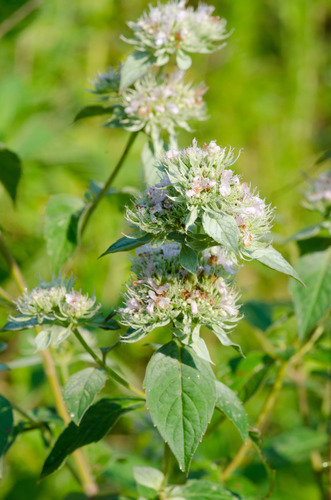
Hoary Mountainmint
Pycnanthemum incanum
A silver-dusted gem of the late summer garden, Hoary Mountainmint is the ultimate 'pollinator magnet.' Its frosted foliage and spicy minty aroma make it a bustling hub for the most beautiful and beneficial insects in your neighborhood.
Quick Identification
Size
Height of 2-4 feet (60-120 cm); spread of 2-3 feet (60-90 cm)
Colors
Silvery-white 'frosted' upper bracts; dusty green lower leaves; white to pale lavender flowers with minute purple spots
Key Features
- Silvery-white bracts that look like a dusting of snow or frost
- Square-shaped stems covered in fine white hairs
- Strong, spicy spearmint fragrance when the foliage is crushed
When You’ll See Them
Behavior
Hoary Mountainmint is often described as the 'town square' of the insect world. While it is a stationary plant, its behavior is characterized by its intense interaction with local fauna. From mid-summer to early autumn, the plant becomes a buzzing hub of activity, attracting a higher diversity of pollinators than almost any other native North American plant. It is particularly famous for attracting beneficial predatory wasps, such as the Blue-winged Scentless Plant Bug Hunter, which are fascinating to observe and harmless to humans unless provoked.
Unlike many members of the mint family, Hoary Mountainmint is a 'clump-former' rather than an aggressive runner. It expands slowly through rhizomes, making it a well-behaved addition to a suburban backyard or wildlife meadow. It is also highly resistant to herbivores; the high essential oil content in the leaves makes them unpalatable to deer and rabbits, allowing the plant to act as a reliable structural element in the garden throughout the growing season.
EverydayEarth exclusive
Camera Tips
Capturing Hoary Mountainmint on a backyard camera is less about the plant itself and more about the incredible 'micro-wildlife' it attracts. To get the best results, use a camera with a macro lens or a close-focus feature. Position your camera on a sturdy stake or mini-tripod just 12 to 24 inches away from the flowering heads. Because the silver bracts reflect a lot of light, aim for an angle where the sun is behind the camera or slightly to the side to avoid washing out the delicate purple spots on the tiny flowers.
Since insects move quickly, set your camera to 'Burst Mode' or high-speed video. If your camera allows for manual trigger sensitivity, set it to the highest level; a large wasp or a swallowtail butterfly might not trigger a standard PIR sensor designed for deer. The silver foliage provides a beautiful high-contrast background, making it easier for the camera’s AI to lock focus on moving insects.
For a unique perspective, try a time-lapse setting during a bright, calm morning. This allows you to capture the 'changing of the guard' as different species of bees, wasps, and butterflies take turns visiting the nectar-rich clusters. Because this plant is most active during the heat of the day, ensure your camera isn't in a spot where it will overheat in direct noon sun, or use a small weather shield to provide shade for the device itself while keeping the plant in the light.
Frequently Asked Questions
Record Hoary Mountainmint at your habitat
Connect a camera to start building your own species record — AI identifies every visitor automatically.