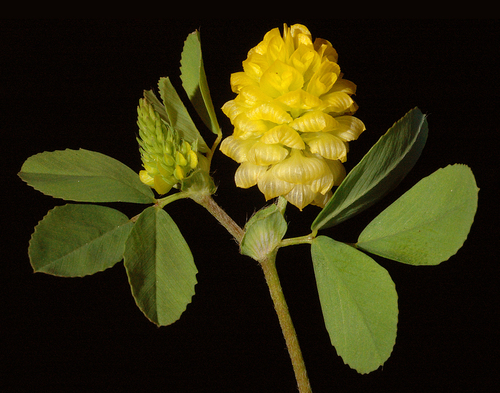
hop trefoil
Trifolium campestre
With its cheerful yellow globes and unique papery texture, hop trefoil is a tiny powerhouse of the meadow. This nitrogen-fixing clover is a favorite of pollinators and a sign of a healthy, sun-soaked ecosystem.
Quick Identification
Size
Grows 10–30 cm (4–12 inches) in height with a similar spread
Colors
Bright yellow flower heads that turn light brown and papery; medium green trifoliate leaves; occasionally reddish stems
Key Features
- Globe-shaped flower heads containing 20-40 tiny yellow blossoms
- The central leaflet is on a longer individual stalk (petiolule) than the side leaflets
- Mature flower heads turn brown and resemble dried hops
- Leaves are divided into three egg-shaped leaflets with finely toothed edges
When You’ll See Them
Behavior
Hop trefoil is a resilient annual or biennial plant that is much more active than it first appears. It is a member of the legume family, meaning it works underground in a symbiotic relationship with bacteria to fix nitrogen in the soil. This process enriches the earth, making hop trefoil a beneficial neighbor for other garden plants. It thrives in sunny, well-drained spots where the soil might be too poor or sandy for more delicate species.
Throughout the day, hop trefoil acts as a high-traffic hub for local pollinators. Its dense, nectar-rich flower heads are particularly attractive to honeybees and smaller solitary bees. One of its most interesting behaviors is its "sleep movement" or nyctinasty; as the sun sets, the leaflets often fold together or tilt upward to reduce moisture loss and protect the plant's surface, only to reopen as the morning light returns.
EverydayEarth exclusive
Camera Tips
To capture the intricate details of hop trefoil, you need to think low. Since this plant rarely stands taller than a foot, mount your AI camera on a ground-level stake or a very short tripod. A slight downward angle of about 30 to 45 degrees works best, as it allows the camera to see both the unique "hop-like" flower clusters and the leaf structure, which is crucial for identification. If your camera allows for manual focus or has a macro setting, aim for a distance of 12 to 18 inches to catch the fine textures of the petals.
One of the most rewarding ways to use an AI-powered camera with hop trefoil is to set up a time-lapse. By taking a photo every 20 minutes over a 24-hour period, you can document the plant's nyctinastic movements—watching the leaves "wake up" in the morning and fold away at night. This provides a fascinating glimpse into the life of a plant that most people overlook. For best results, choose a plant that isn't shaded by taller grasses to ensure consistent lighting throughout the day.
Because hop trefoil is a magnet for insects, it serves as an excellent "natural bait" station. Position your camera near a dense patch of blooms on a calm, sunny day. The AI will likely trigger on a variety of visitors, including common blue butterflies, honeybees, and hoverflies. To avoid overexposure from the bright yellow flowers in midday sun, try to position the camera so it is not facing directly into the sun, or use the dappled light of a nearby tree to provide softer, more even illumination for your shots.
Frequently Asked Questions
Record hop trefoil at your habitat
Connect a camera to start building your own species record — AI identifies every visitor automatically.