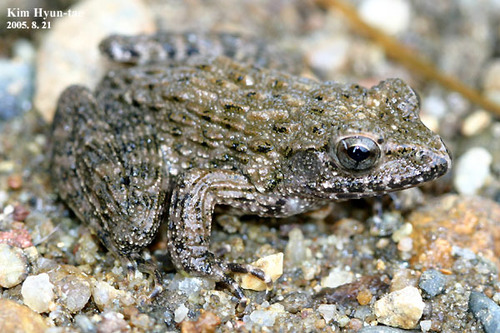
Imienpo Station frog
Glandirana emeljanovi
A master of texture and camouflage, the Imienpo Station frog is the 'wrinkled wonder' of Northeast Asian wetlands. Often hidden in plain sight, this small amphibian is a prized find for backyard observers with a keen eye for detail.
Quick Identification
Size
40-60 mm (1.5-2.4 inches) in length
Colors
Dull olive-brown to dark gray upper body with dark, irregular mottling; underside is typically cream or pale yellow, often featuring dark spots or marbling.
Key Features
- Distinctively wrinkled and warty skin texture
- Small, robust body with a rounded snout
- Golden-brown iris with a horizontal pupil
- Heavily mottled belly and throat
When You’ll See Them
Behavior
The Imienpo Station frog is a secretive and highly aquatic species that spends the majority of its life near the water's edge. Unlike many other frogs that may wander far into forests or grasslands, this species prefers the safety of the mud. When startled, they are known for their rapid diving reflex, plunging into murky water and burying themselves in the substrate to evade predators.
During the breeding season, which typically spans from late May through July, the behavior of males changes significantly. They congregate in shallow, slow-moving water bodies such as rice paddies and drainage ditches to call for females. Their vocalizations are relatively low and rasping compared to other species. Outside of the mating season, they lead a solitary existence, hiding under flat rocks or within dense aquatic vegetation during the heat of the day to keep their skin moist.
EverydayEarth exclusive
Camera Tips
To capture high-quality footage of the Imienpo Station frog, your camera must be positioned extremely low. These frogs spend their time pressed against the mud or perched on low rocks. Aim for a mounting height of just 3 to 5 inches off the ground. If you are placing the camera near a backyard pond, look for a 'landing flat'—a flat stone or a patch of bare mud where the frog might climb out of the water to hunt. Angle the camera slightly downward to ensure the frog's distinctive wrinkled back is in focus.
Because these frogs are small and move with quick, jerky hops, sensor sensitivity is key. Set your AI-powered camera to its highest sensitivity level and use a short trigger interval. If your camera supports it, enable a 'macro' or 'close-focus' mode, as the most compelling shots will occur within three feet of the lens. Standard trail camera settings often result in a blurry subject at this range, so testing the focal distance with a stationary object first is highly recommended.
The biggest challenge in photographing this species is its reflective, wet skin. Under a standard high-power infrared flash, the frog may appear as a bright white blob. If your camera allows for adjustable flash power, set it to 'Low' or 'Subtle.' This will reveal the intricate textures and mottling of the skin rather than washing them out. Alternatively, placing a small, low-intensity solar-powered garden light near the target area can provide enough ambient light for the camera to stay in color mode longer into the evening.
Seasonality plays a huge role in your success. Focus your efforts during humid nights or immediately following a summer rainstorm. These are the peak movement times for Imienpo Station frogs. If you are setting up in a backyard, ensure the area has plenty of cover like leaf litter or flat stones, which will encourage the frog to linger in front of the lens rather than just passing through.
Similar Species
Species that look similar or are commonly confused with Imienpo Station frog.
Frequently Asked Questions
Record Imienpo Station frog at your habitat
Connect a camera to start building your own species record — AI identifies every visitor automatically.