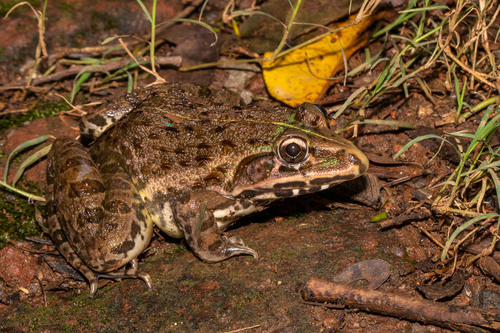
Indus Valley Bullfrog
Hoplobatrachus tigerinus
A heavyweight of the wetlands, the Indus Valley Bullfrog is famous for its massive size and the male's stunning mid-summer transformation into a vibrant yellow-and-blue spectacle.
Quick Identification
Size
4.7 to 6.7 inches (12 to 17 cm) in length; can weigh up to 1.1 lbs (0.5 kg)
Colors
Olive green or brownish with dark spots; breeding males turn bright lemon yellow with indigo blue vocal sacs
Key Features
- Large muscular hind legs with tiger-like dark spots
- Distinct longitudinal skin folds running down the back
- Pointed snout with a large, visible tympanum (eardrum)
- Vibrant blue throat sacs in breeding males
When You’ll See Them
Behavior
The Indus Valley Bullfrog is a formidable and solitary predator known for its impressive size and aggressive hunting style. Unlike many smaller frog species that shy away from confrontation, this bullfrog is an apex predator of the undergrowth, capable of taking down prey nearly its own size. They are primarily sit-and-wait predators, remaining perfectly still for hours in a crouched position until an unsuspecting meal wanders within striking distance.
During the dry season, they may burrow into moist soil to stay cool, but they emerge with incredible energy during the monsoon rains. This is when their social behavior peaks; males gather in shallow pools and flooded fields to engage in loud, competitive calling. While they are generally wary of humans, they have adapted well to human-altered landscapes like rice paddies and suburban gardens, provided there is enough cover and moisture to support them.
EverydayEarth exclusive
Camera Tips
To capture high-quality footage of the Indus Valley Bullfrog, ground-level placement is essential. Mount your camera no more than 3 to 5 inches off the ground, aiming slightly downward toward the edge of a water feature or a damp, muddy patch. These frogs have a habit of returning to the same 'hunting perch' night after night, so if you spot one in a particular corner of your garden, that is the perfect spot for a camera setup.
Because they are nocturnal and have highly reflective, moist skin, lighting is your biggest challenge. Standard infrared flashes can sometimes 'wash out' the frog, making it look like a white blob. If your camera allows for adjustable flash settings, set it to 'Medium' or 'Low.' Alternatively, placing the camera at a 45-degree angle to the frog's expected position, rather than head-on, can reduce the glare from the infrared LEDs hitting their wet skin.
Trigger speed is critical for this species. While they sit still for long periods, their strike is lightning-fast. Use a camera with a trigger speed of 0.3 seconds or faster, and set it to take 3-photo bursts or short 10-second videos. To increase your chances of activity, place a small, low-intensity solar light nearby; the light will attract nocturnal insects, creating a buffet that will keep the bullfrog in front of your lens for much longer.
Similar Species
Species that look similar or are commonly confused with Indus Valley Bullfrog.
Frequently Asked Questions
Record Indus Valley Bullfrog at your habitat
Connect a camera to start building your own species record — AI identifies every visitor automatically.