Inkberry Holly Leafminer
Phytomyza glabricola
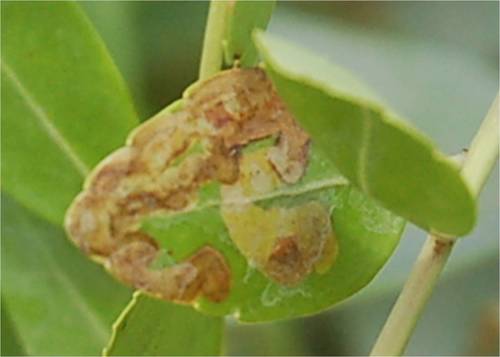
Though the adult fly is smaller than a grain of rice, the Inkberry Holly Leafminer leaves an unmistakable signature on the landscape. Its winding, artistic trails transform garden hedges into a living map of insect development.
Quick Identification
Size
Adults: 1.5–2.5 mm (0.06–0.1 inches); Larvae: up to 3 mm (0.12 inches)
Colors
Adults are matte grayish-black; larvae are pale yellow to translucent white; leaf mines appear light green, tan, or brown
Key Features
- Distinctive winding serpentine or blotch-like trails on leaf surfaces
- Tiny, dark, fly-like adult body
- Exclusively found on Inkberry Holly (Ilex glabra) foliage
- Pupae visible as small, dark, seed-like lumps under the leaf epidermis
When You’ll See Them
Behavior
The Inkberry Holly Leafminer is a highly specialized fly that spends almost its entire life cycle within the confines of a single leaf. The adult flies emerge in late spring, specifically timed with the flush of new growth on Inkberry bushes. Females use their sharp ovipositors to pierce the tender undersides of new leaves to feed on sap and deposit eggs. This 'stippling' behavior often leaves behind tiny, characteristic pinpricks that are the first sign of their presence.
Once the eggs hatch, the larvae begin their unique lifestyle as 'internal' herbivores. They tunnel through the mesophyll—the fleshy middle layer of the leaf—while leaving the waxy outer cuticle intact for protection. This creates a visible, wandering trail known as a mine. These insects are solitary and non-aggressive, relying entirely on their camouflage and the physical barrier of the leaf to hide from predators like parasitic wasps and birds.
EverydayEarth exclusive
Camera Tips
Capturing the Inkberry Holly Leafminer requires a shift in perspective. Standard trail cameras will not be able to resolve these tiny insects. Instead, the best way to monitor them is using a camera with a dedicated macro lens or a high-quality smartphone macro attachment. Because the larvae stay inside the leaves, you are essentially photographing 'environmental DNA'—the visible record of their movement through the plant tissue.
To photograph the adults, mount your camera on a steady tripod and focus on the fresh, bright green tips of an Inkberry bush during a sunny morning in late May. Use a high shutter speed (1/500s or faster) because these flies move with quick, erratic bursts. Avoid using a flash if possible, as the waxy surface of the holly leaves can create a harsh glare that obscures the fly's features. Instead, look for 'backlighting'—positioning the sun behind the leaf—to reveal the larvae moving inside the mine.
For a truly unique project, set up a time-lapse on a single leaf that shows early signs of mining. Secure the branch to a stake so it doesn't move in the wind, and take one photo every few hours over the course of two weeks. This will create a stunning visual of the mine 'growing' as the larva eats its way through the leaf. Ensure your camera is set to a fixed focus and manual exposure to keep the transition smooth between frames.
Similar Species
Species that look similar or are commonly confused with Inkberry Holly Leafminer.
Frequently Asked Questions
Record Inkberry Holly Leafminer at your habitat
Connect a camera to start building your own species record — AI identifies every visitor automatically.