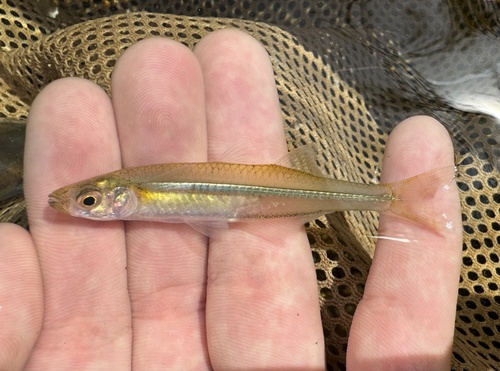
Inland Silverside
Menidia beryllina
A shimmering marvel of North American shallows, the Inland Silverside is a master of the school. Its translucent body and brilliant silver stripe make it one of the most captivating fish to observe in backyard waterways.
Quick Identification
Size
5 to 10 cm (2 to 4 inches) in length; typically weighs less than 15 grams
Colors
Translucent pale green to yellowish-white on the back with a brilliant, reflective silver stripe running horizontally along the side; belly is white or silvery.
Key Features
- Prominent bright silver lateral band
- Two widely separated dorsal fins
- Slender, elongated, and nearly translucent body
- Upturned, small mouth for surface feeding
When You’ll See Them
Geographic range
Where Does the Inland Silverside Live?
The Inland Silverside is native to the Atlantic and Gulf coasts of North America, stretching from Cape Cod in Massachusetts down to the Rio Grande in Texas. While naturally a coastal species, it has been widely and successfully introduced into freshwater reservoirs and lakes across the United States, including significant populations in California and the Midwest. It is a highly resilient species that thrives in both the brackish waters of the coast and landlocked inland water bodies.
Basemap © OpenStreetMap contributors
Behavior
Inland Silversides are highly social, schooling fish that spend most of their lives near the surface of the water. They are known for their synchronized swimming patterns, which help protect them from predators like bass and wading birds. When threatened or during high activity, they may even leap briefly from the water, creating a shimmering effect that gives them their name.
These fish are extremely adaptable and can thrive in a wide range of salinities, from completely fresh water to hypersaline lagoons. They are often the most abundant species in their local ecosystem, serving as a vital link in the food chain by converting plankton into energy for larger game fish. In suburban settings, they are frequently seen around docks and piers where they seek shelter and food.
EverydayEarth exclusive
Camera Tips
Capturing the Inland Silverside requires an underwater camera setup or a high-quality lens positioned over clear, shallow water. If you have a backyard pond or live on a waterfront, mount your camera on a dock piling or a weighted tripod submerged in 1 to 2 feet of water. Aim the lens horizontally across the top few inches of the water column, as these fish are surface-dwellers. Because of their translucent bodies and reflective silver stripes, they photograph best when the sun is at a slight angle—early morning or late afternoon—to avoid harsh glare while highlighting their metallic shimmer.
To attract a school within range of your lens, you can use a fine-mesh feeder bag filled with crushed fish flakes or small pieces of bread, though natural zooplankton is their preference. For the best AI-recognition results, ensure the water is calm; ripples can distort their slender profiles. A polarizing filter is an essential accessory if you are shooting from above the water, as it cuts through the surface reflection to reveal the fish beneath.
If you are using a motion-activated trail camera, set it to the highest sensitivity and use the video mode. Silversides move quickly and in large groups; a still photo might catch only a blur, whereas a 10-second video clip will capture the fascinating 'sparkle' effect of the school turning in unison. During the spawning season (spring and summer), focus your camera near submerged vegetation or grasses where they gather in high densities to lay eggs.
Similar Species
Species that look similar or are commonly confused with Inland Silverside.
Frequently Asked Questions
Record Inland Silverside at your habitat
Connect a camera to start building your own species record — AI identifies every visitor automatically.