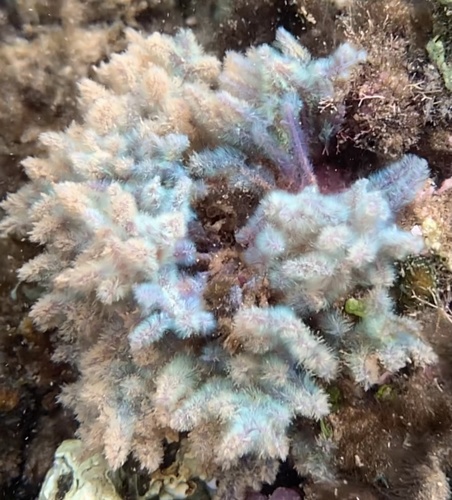
Iridescent Seaweed
Dasya iridescens
Witness the neon jewel of the ocean floor. The Iridescent Seaweed transforms ordinary red fronds into a shimmering display of electric blue and violet light as it dances in the current.
Quick Identification
Size
5-15 cm (2-6 inches) in height; fronds are typically 1-3 mm thick
Colors
Deep rosy pink to crimson red, characterized by a striking neon blue or violet iridescence when submerged
Key Features
- Feathery, soft-textured fronds with delicate branching
- Vibrant blue-violet shimmer visible under water
- Small discoid holdfast for attachment to substrates
- Main axis covered in fine, hair-like filaments
- Translucent red coloration when removed from water
When You’ll See Them
Behavior
Dasya iridescens, commonly known as Iridescent Seaweed, is a captivating marine alga that functions as a primary producer in coastal ecosystems. Unlike animals, its 'behavior' is dictated by the movement of the sea; it sways gracefully with the ebb and flow of tides and currents. This movement is vital for its survival, as it helps move water over the surface of its fronds, facilitating the exchange of gases and the absorption of dissolved nutrients like nitrogen and phosphorus.
The species is most famous for its structural coloration. While the pigment of the plant is red, its surface structure creates a thin-film interference effect, similar to an oil slick on water, which reflects a brilliant blue or purple glow. This iridescence is thought to be an adaptation to low-light environments, helping the seaweed maximize light capture for photosynthesis in deeper or shaded waters. It does not interact with humans directly, but it provides a critical micro-habitat for tiny crustaceans and marine gastropods.
EverydayEarth exclusive
Camera Tips
Capturing the ethereal glow of Iridescent Seaweed requires an underwater camera setup, such as a GoPro or a specialized marine trail camera. To truly highlight the blue shimmer, camera placement is everything. The iridescence is a result of light hitting the fronds at specific angles, so avoid placing your camera directly under overhead light. Instead, angle the lens at a 45-degree slope relative to the seaweed and the surface light. This side-lighting helps the camera sensor pick up the 'interference' colors that make this species so special.
Because this seaweed lives in the subtidally, current and surge can cause significant motion blur. Use a weighted camera base or a heavy-duty suction mount attached to a rock or piling to ensure stability. If your camera settings allow, opt for a high frame rate (60fps or higher). This allows you to capture the fluid, hypnotic movement of the feathery branches without losing detail. In post-processing, or if using a camera with filters, a red-lens filter is highly recommended to restore the warm red tones that are naturally filtered out by seawater, making the blue iridescence pop even more vividly against the background.
Timing your 'shoot' is also crucial. The best footage is usually captured during a slack tide—the brief period when the tide is turning and the water is relatively still. This reduces the amount of suspended sediment (backscatter) in the water, resulting in much clearer images. Aim for a bright, sunny day when the sun is high in the sky; the increased light penetration into the water column provides the energy needed to trigger the reflective properties of the plant's surface.
Finally, consider the 'macro' capabilities of your camera. Iridescent Seaweed is relatively small and its most beautiful features are its fine, hair-like filaments. If your trail camera has a fixed focus, place it approximately 12 to 18 inches away from the specimen. If you are using a backyard 'tide pool' setup or a shallow-water rig, ensure the area is free of competing kelp or debris that might drift in front of the lens and trigger the motion sensor unnecessarily.
Frequently Asked Questions
Record Iridescent Seaweed at your habitat
Connect a camera to start building your own species record — AI identifies every visitor automatically.