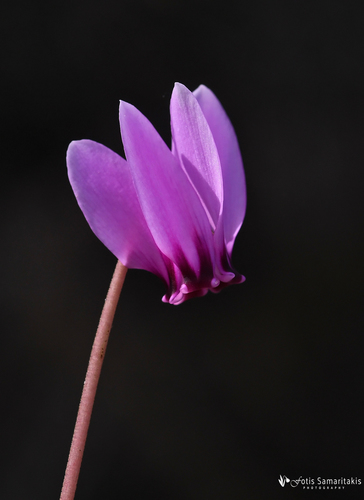
Ivy-leaved cyclamen
Cyclamen hederifolium
A hardy jewel of the autumn landscape, the Ivy-leaved cyclamen braves the cooling air to blanket the forest floor in shades of pink and silver. Its distinctive marbled foliage and 'backwards' growing cycle make it a fascinating subject for any backyard observer.
Quick Identification
Size
Height: 10–15 cm (4–6 in); Spread: 15–30 cm (6–12 in)
Colors
Flowers are shades of pale to deep pink or pure white, often with a darker magenta 'V' shape at the base; leaves are dark green with distinctive silvery-gray marbling.
Key Features
- Ivy-shaped leaves with angled lobes
- Silvery-white marbled patterns on foliage
- Reflexed (swept-back) flower petals
- Flowers often appear before or with the first leaves in autumn
When You’ll See Them
Behavior
The Ivy-leaved cyclamen is a resilient geophyte that spends the hot summer months in a state of dormancy, tucked away as a corky tuber beneath the soil. As the first rains of late summer or early autumn arrive, the plant awakens, often sending up its delicate, nodding flowers before the foliage even appears. This unique timing makes it a vital resource for late-season pollinators looking for nectar when most other flora has faded.
One of its most fascinating social interactions is with ants, a process known as myrmecochory. After the flowers are pollinated, the flower stalks coil tightly like a spring, pulling the developing seed pod down toward the ground. The seeds are coated in a sugary substance called an elaiosome, which encourages ants to carry the seeds back to their nests, effectively planting the cyclamen in new locations throughout the garden or woodland.
EverydayEarth exclusive
Camera Tips
Capturing the Ivy-leaved cyclamen requires a change in perspective. Most trail cameras are set at waist height for mammals, but to truly appreciate this species, you must mount your camera just a few inches above the ground. Use a small 'gorillapod' or a block of wood to stabilize the camera at a 'mouse-eye' level, focusing on a patch where the pink 'noses' are just beginning to poke through the leaf litter in late August.
Time-lapse mode is your best friend with this species. Set your camera to take a photo every 2 to 4 hours. Over the course of a week, you will capture the dramatic 'unfolding' of the reflexed petals and the slow, elegant unfurling of the marbled leaves. If your camera has a macro or close-focus setting, ensure it is engaged, as the intricate silver patterns on the leaves are a primary draw for viewers.
To capture the wildlife that interacts with the cyclamen, switch to video mode with a high trigger sensitivity. These flowers are magnets for late-season hoverflies and bumblebees. Position the camera so the sun is behind you or to the side to highlight the translucent quality of the pink petals. Avoid direct midday sun, which can wash out the delicate silver marbling; early morning or 'golden hour' light provides the best contrast for the leaf patterns.
Don't stop filming once the flowers fade. If you keep your camera active into November, you can capture the fascinating coiling of the stems. This mechanical movement is slow but provides an excellent long-term time-lapse project, showing how the plant physically hides its seeds from predators while waiting for ant helpers to arrive.
Frequently Asked Questions
Record Ivy-leaved cyclamen at your habitat
Connect a camera to start building your own species record — AI identifies every visitor automatically.