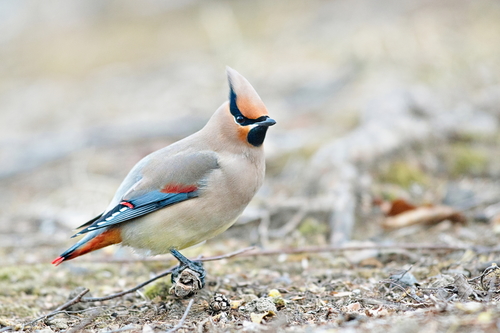
Japanese Waxwing
Bombycilla japonica
A masterpiece of East Asian avian beauty, the Japanese Waxwing is a winter visitor known for its sleek crest and vibrant red tail tips. These social wanderers bring life to snowy gardens as they feast in chattering nomadic flocks.
Quick Identification
Size
Length of 17-19 cm (6.7-7.5 inches); wingspan of 28-32 cm (11-12.5 inches); weight between 45-65 grams (1.6-2.3 ounces).
Colors
Soft pinkish-brown plumage with a grey rump and pale yellow belly. Features a sharp black mask and throat, with bright red tips on the tail and red 'waxy' appendages on the wing feathers.
Key Features
- Distinctive tall, pointed crest
- Deep red band at the tip of the tail
- Sleek black mask extending through the eye
- Red waxy droplets on secondary wing feathers
When You’ll See Them
Geographic range
Where Does the Japanese Waxwing Live?
The Japanese Waxwing is native to the eastern Palaearctic, with its primary breeding grounds located in the remote coniferous forests of southeastern Russia and northeastern China. During the winter months, these birds migrate to find more abundant food sources, concentrating heavily in Japan, the Korean Peninsula, and eastern China. While they are a staple of the East Asian winter landscape, they occasionally venture as far south as Taiwan or northern Vietnam during exceptionally cold seasons.
Basemap © OpenStreetMap contributors
Behavior
Japanese Waxwings are highly social and gregarious birds, almost always found in tight-knit flocks that can range from a dozen to several hundred individuals. They are famously nomadic during the winter, wandering across the landscape in search of fruit-bearing trees. Their flight is strong and direct, but they are incredibly agile when foraging, often seen hanging upside down to reach a stubborn berry or performing brief aerial sallies to catch insects during the summer months.
Interactions within the flock are generally harmonious, characterized by a constant stream of high-pitched, trilling whistles that help the group stay together while moving through dense foliage. While they are relatively shy in their remote northern breeding grounds, they become much more habituated to human environments during the winter, frequently visiting suburban parks and gardens where ornamental berry bushes are plentiful. They are known for 'irruptive' migrations, where their numbers in a specific region fluctuate wildly from year to year based on food availability.
EverydayEarth exclusive
Camera Tips
To capture high-quality footage of Japanese Waxwings, focus your camera placement on their primary winter draw: berry-producing shrubs and trees. Species like Mountain Ash (Sorbus), Mistletoe, and various Viburnums are magnets for these birds. Mount your camera at a height of 5 to 7 feet, ideally on a tripod or a sturdy branch overlooking a cluster of ripe fruit. Because waxwings feed in groups, a wider field of view is preferable to capture the social interaction of the flock rather than focusing on a single branch.
Lighting is the most critical factor for showcasing their unique colors. Position your camera to face north or east so the low winter sun illuminates the birds from behind the lens. This direct light will help the AI accurately identify the species and highlight the subtle pinkish tones of their plumage and the brilliant red tips on their tails. Avoid placing the camera in deep shade, as their brown-grey bodies can easily lose definition against dark bark.
Since waxwings are fast-moving, use a camera with a high trigger speed or a dedicated 'bird' mode that utilizes pre-roll video. If your camera supports it, set it to record in 60fps to smooth out their rapid head movements and fluttering wings. Another great trick is to place a birdbath with a heater or a small fountain nearby; Japanese Waxwings are frequent drinkers and bathers, and a water source can often provide clearer, more stationary shots than a busy feeding branch.
Lastly, be mindful of the season and your battery life. These birds are most common in suburban areas during the coldest months (January and February). Cold weather can drain camera batteries quickly, so consider using an external power pack or high-capacity lithium batteries to ensure you don't miss a nomadic flock when they finally decide to visit your yard.
Similar Species
Species that look similar or are commonly confused with Japanese Waxwing.
Frequently Asked Questions
Record Japanese Waxwing at your habitat
Connect a camera to start building your own species record — AI identifies every visitor automatically.